30-day treadmill challenge for beginners
Thirty sessions of walking, incline and short jog intervals, building from about 23 minutes to 40. Paced by effort rather than speed, so it works whatever your machine says — and there’s a walk-only route all the way through. You’ll need a treadmill.
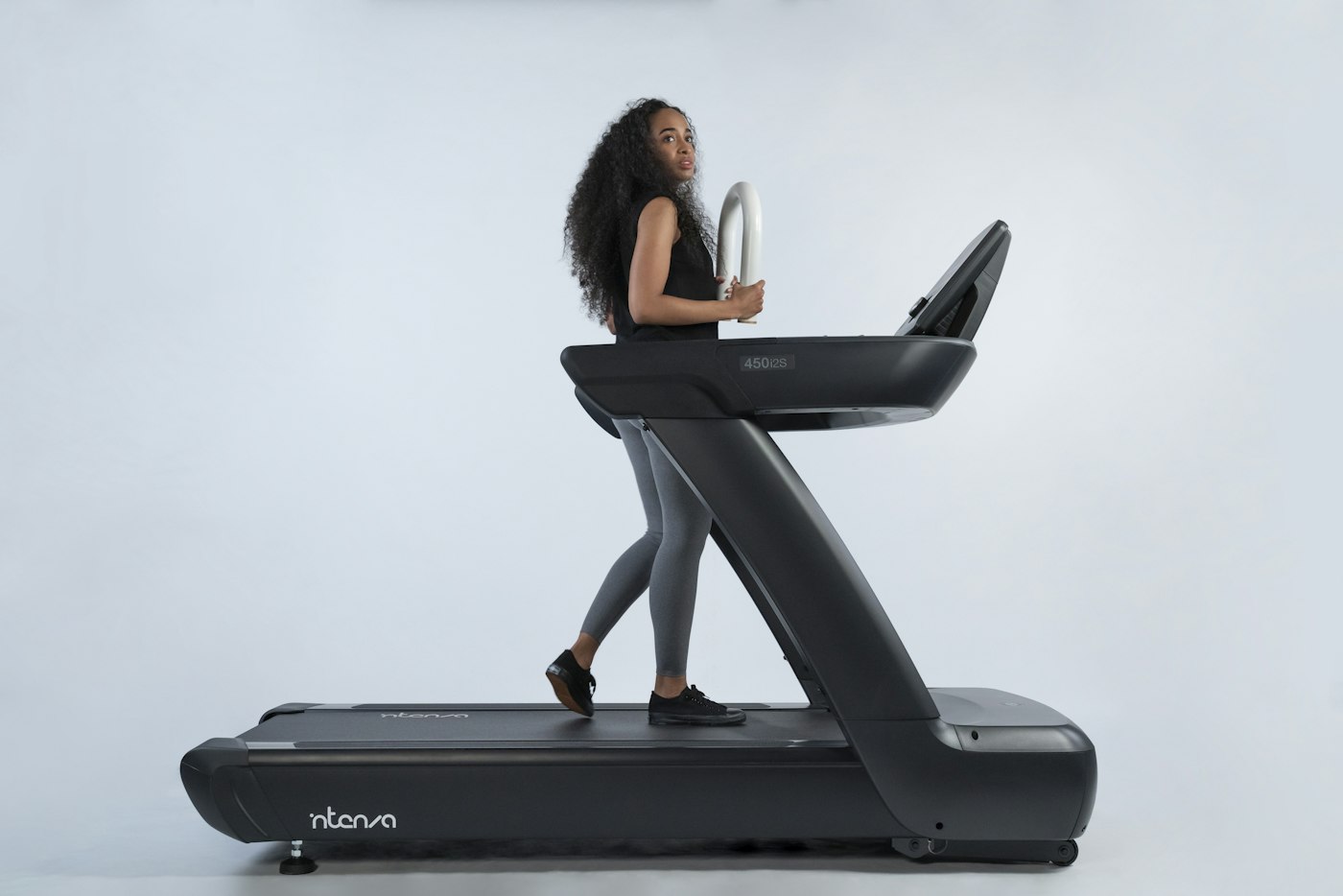
You don’t have to run. There’s a walk-only route through the whole month, and the plan is paced by effort rather than speed — which matters, because the same 5 km/h is a stroll for one person and hard work for another, and no two treadmills are calibrated quite the same.
Twenty-two sessions over 30 days, starting around 23 minutes and finishing at 40, with four rest days and four easy days. Day 30 records your distance, which gives walkers a result as well as runners.
Before you start
General information only, not medical advice. Check with a doctor before starting, especially if you’re pregnant or postpartum, injured, have a heart, blood pressure, joint or other medical condition, take medication, or haven’t exercised in a long time. Use the treadmill’s safety clip. Stop if you feel dizzy, short of breath or in pain — see who should modify or skip this below.
Challenge at a glance
| Duration | 30 days, 22 sessions |
|---|---|
| Session time | 20–40 minutes including warm-up and cool-down |
| Equipment | A treadmill, at home or at a gym |
| Difficulty | Beginner. Walkers welcome throughout |
| Paced by | Effort, using the talk test |
| Rest | Days 7, 14, 21 and 28, plus an easy day each week |
| Goal | Stamina, and a habit that survives day 31 |
How the challenge works
- Do the session as written, warm-up and cool-down included — those walking minutes aren’t padding.
- Pace by the talk test, not the display. The console gives you a readout, not a target.
- Walking counts, all month. Where the plan says jog, a brisk walk at the same effort does the same job.
- Rest and easy days are part of the plan — four of each, and skipping them to go faster is how a month like this ends early.
- Stop if anything feels wrong. Dizziness, chest discomfort or breathlessness that doesn’t settle are reasons to stop, not push.
Set your pace: the talk test
The most reliable way to pace yourself needs no numbers at all — it’s what you could say out loud while doing it:
| Effort | How it feels | Rough speed |
|---|---|---|
| Easy | You could hold a full conversation | 3–3.5 mph · 5–5.5 km/h |
| Brisk | Short sentences only, breathing noticeably | 3.5–4.5 mph · 5.5–7 km/h |
| Jog | A few words at a time | 4.5–6 mph · 7–9.5 km/h |
Those speeds are starting points, not instructions. Height, fitness, leg length and the machine’s calibration all shift them — plenty of people reach “brisk” at 3 mph while others are still strolling at 4. If the effort column and the speed column disagree, effort wins.
Warm-up and cool-down
Every session starts with five minutes of easy flat walking and ends with three to five minutes of the same, slowing gradually rather than stopping dead. Both are counted in the totals below. Afterwards, 30 seconds each on calves, hamstrings, quads and hip flexors.
The 30-day treadmill plan
Every session includes a 5-minute easy walk to warm up and a 3–5 minute easy walk to cool down; the totals below include both. “8 × (1 / 1)” means eight rounds of one minute on, one minute easy.
| Day | Session | Total |
|---|---|---|
| Week 1 — mostly walking | ||
| 1 | 15 min steady walk, flat | 23 min |
| 2 | 8 × (1 min brisk / 1 min easy) | 25 min |
| 3 | 15 min steady walk at 2% incline | 24 min |
| 4 | Easy: 20 min flat walk, conversation pace | 20 min |
| 5 | 6 × (1 min jog or brisk walk / 90 sec easy) | 24 min |
| 6 | 18 min steady walk, flat | 27 min |
| 7 | Rest | — |
| Week 2 — intervals arrive properly | ||
| 8 | 8 × (1 min jog / 90 sec easy) | 30 min |
| 9 | 20 min steady at 3% incline | 30 min |
| 10 | Easy: 20 min flat walk | 20 min |
| 11 | 6 × (90 sec jog / 90 sec easy) | 28 min |
| 12 | 5 × (2 min at 4% incline / 2 min flat) | 30 min |
| 13 | 22 min continuous, walk or jog | 32 min |
| 14 | Rest | — |
| Week 3 — longer | ||
| 15 | 8 × (90 sec jog / 90 sec easy) | 34 min |
| 16 | 25 min steady at 3% incline | 35 min |
| 17 | Easy: 25 min flat walk | 25 min |
| 18 | 5 × (2 min jog / 2 min easy) | 30 min |
| 19 | 6 × (2 min at 5% incline / 2 min flat) | 34 min |
| 20 | 25 min continuous | 35 min |
| 21 | Rest | — |
| Week 4 — the hardest week | ||
| 22 | 6 × (2 min jog / 2 min easy) | 34 min |
| 23 | 30 min steady at 3–4% incline | 40 min |
| 24 | Easy: 25 min flat walk | 25 min |
| 25 | 5 × (3 min jog / 2 min easy) | 35 min |
| 26 | 8 × (2 min at 5% incline / 1 min flat) | 34 min |
| 27 | 30 min continuous | 40 min |
| 28 | Rest | — |
| Finish | ||
| 29 | Easy: 20 min flat walk | 20 min |
| 30 | 30 minutes continuous at your best steady effort. Write down the distance. | 40 min |
Do day 30 on day 1 as well — same 30 minutes, same honest effort — and note both distances. That comparison is the result of the month, and it works identically whether you walked the whole thing or jogged it.
The walk-only route
Follow the plan exactly as written, swapping every jog for a brisk walk and every interval day’s effort for the incline instead: where it says jog, walk at 4–6% incline for the same interval and drop back to flat for the recovery. You’ll finish with 30 continuous minutes of brisk walking and a measured distance, which is a genuinely strong month.
Treadmill safety
The belt is the one real hazard here, and most plans don’t mention it at all.
- Clip the safety key to your clothing. It stops the belt instantly if you come off the back, and it’s the thing everyone skips.
- Start the belt slowly and step on once it’s moving steadily — never jump onto a fast belt.
- Hands off the rails except for balance. Leaning takes weight off your legs, which makes the session easier than the display claims.
- Eyes forward, not down at your feet — looking down drifts you backward without noticing.
- To stop, step onto the side rails first, then slow the belt and switch off.
- Keep children and pets out of the room, and unplug a home treadmill when it isn’t in use.
Treadmill vs outdoors, and making it less boring
A flat belt is slightly easier than flat ground, since there’s no wind and no uneven surface. Setting 1–2% incline closes most of that gap and is a sensible default for steady sessions.
On the boredom, which is the real reason treadmill plans get abandoned: intervals help most, because a session broken into 90-second pieces passes faster than 25 unbroken minutes. Beyond that — a show you only watch while walking, a podcast saved for sessions, or a towel over the display so you go by feel.
One thing not to trust: the calorie readout is an estimate. Most machines don’t know your weight and none know your metabolism, so the figure can be well out. Track time and distance — those it actually measures.
Easier and harder variations
If you need it easier
- Walk-only, as above — not a lesser version of the plan.
- Halve the intervals, keep the recoveries, or repeat week 1 all month.
- Flat throughout, skipping the incline days if your knees or hips object.
- Split a session in two on a busy day.
If you need it harder
- Longer jog intervals, same recovery — three minutes on, 90 seconds easy.
- Steeper incline — 6 to 8% on the hill intervals.
- Faster intervals, keeping the recoveries genuinely easy.
- Turn the easy days into steady sessions.
Who should modify or skip this challenge
Speak to a doctor before day 1 if any of these apply:
- A heart condition, high or low blood pressure, or medication affecting blood pressure or heart rate
- Dizziness, fainting or balance problems — a moving belt is a poor place for either
- Knee, hip, ankle or foot pain, including plantar fasciitis. Walking at incline is usually kinder than jogging, but get it checked
- Pregnancy or the postpartum period — walking is often fine and jogging often isn’t; that’s individual advice
- A recent injury or illness, or a long gap since you last exercised
- Any lung condition, or breathlessness that’s new
Tired legs and a bit of next-day soreness are normal. Joint pain, shin pain, chest discomfort or dizziness are not — stop the session and get advice rather than finishing the interval.
What to do if you miss a day
Carry on with the next session. Don’t double up. Miss several days and repeat the week you were on — the twenty-two sessions matter, not the dates they land on.
What to expect from 30 days
Stamina, and more than people expect from a month. Week 1’s sessions feel short by week 4, the day-1 versus day-30 distance usually shows a real gap whether you walked or jogged, and the recovery intervals stop feeling necessary — which is what improving cardiovascular fitness feels like from the inside.
What this page won’t tell you is how many calories you burned or what the scale will say. Those figures are estimates, and body weight depends on far more than half an hour of walking — if that’s the goal, the 30-day habits challenge is the honest version. What you get here is fitness and a habit.
Printable tracker
All 22 sessions with the intervals on each row, plus space for your day-1 and day-30 distances.
Common questions
How long should a beginner be on the treadmill?
Twenty to thirty minutes including warm-up and cool-down, which is where this plan starts. Frequency matters more than duration early on — five sessions of 25 minutes beats two of an hour, for fitness and for the habit.
Is walking on a treadmill enough exercise?
Yes, for cardiovascular fitness. Brisk walking is moderate-intensity activity, and incline makes it harder than people assume — a 5% hill at a brisk pace is demanding. Running gets you there in less time, not to a better place, and costs more in joint load. What walking doesn’t cover is strength, so pair it with a squat challenge or the full-body plan.
Should I use the incline?
Yes — it’s the most useful setting on the machine. 1–2% makes a flat belt feel like flat ground, and higher inclines raise the effort without raising the impact, which is why incline walking suits knees that don’t like jogging. Very steep settings held for long periods strain the calves and achilles, so the plan keeps hill intervals to a few minutes.
Can I do this every day?
The plan runs six days a week with one rest day, which is plenty at these durations. Daily walking is fine for most healthy people; removing the rest days to add jog intervals isn’t, since impact adds up even when sessions feel manageable.
What to try next
If you liked the cardio rather than the machine, a distance challenge you can do outdoors is the natural next step — that one’s coming. For higher intensity in less time, the 30-day burpee challenge. To add strength to the stamina, the 30-day workout challenge.

Tayiba Shabir
Tayiba writes LifestyleRoot’s home, living and habit guides — practical plans you can actually follow, without the hype.
30-Day Treadmill Challenge Chart
Every session includes a 5-minute easy walk to warm up and a 3–5 minute easy walk to cool down. “8 × (1 / 1)” means eight rounds of one minute on, one minute easy. Where it says jog, a brisk walk at the same effort counts — or walk at 4–6% incline instead. Pace by the talk test, not the display. Clip the safety key on.
Week 1 — mostly walking
- 115 min steady walk, flat · 23 min
- 28 × (1 brisk / 1 easy) · 25 min
- 315 min steady at 2% · 24 min
- 4Easy — 20 min flat
- 56 × (1 jog / 90s easy) · 24 min
- 618 min steady walk · 27 min
- 7Rest
Week 2 — intervals
- 88 × (1 jog / 90s easy) · 30 min
- 920 min steady at 3% · 30 min
- 10Easy — 20 min flat
- 116 × (90s jog / 90s easy) · 28 min
- 125 × (2 min at 4% / 2 flat) · 30 min
- 1322 min continuous · 32 min
- 14Rest
Week 3 — longer
- 158 × (90s jog / 90s easy) · 34 min
- 1625 min steady at 3% · 35 min
- 17Easy — 25 min flat
- 185 × (2 jog / 2 easy) · 30 min
- 196 × (2 min at 5% / 2 flat) · 34 min
- 2025 min continuous · 35 min
- 21Rest
Week 4 & finish
- 226 × (2 jog / 2 easy) · 34 min
- 2330 min steady at 3–4% · 40 min
- 24Easy — 25 min flat
- 255 × (3 jog / 2 easy) · 35 min
- 268 × (2 min at 5% / 1 flat) · 34 min
- 2730 min continuous · 40 min
- 28Rest
- 29Easy — 20 min flat
- 3030 min continuous — record your distance
Your 30-minute distance
| Distance (km) | Distance (miles) | Walked or jogged? | |
|---|---|---|---|
| Day 1 | |||
| Day 30 |
Safety: clip the safety key on · start the belt slowly and step on once it’s moving · rails for balance only, don’t lean · eyes forward · step onto the side rails before stopping the belt · keep children and pets away.
Stop for dizziness, chest discomfort, or breathlessness that doesn’t settle. The calorie readout is an estimate — track time and distance instead. General information only, not medical advice. · lifestyleroot.com/habits-challenge/30-day-treadmill-challenge/