Minimalist home decor ideas, room by room
Minimalist doesn’t mean bare, white or cold. Here’s what actually separates a calm room from an empty one — plus how to get there with the furniture you already own.
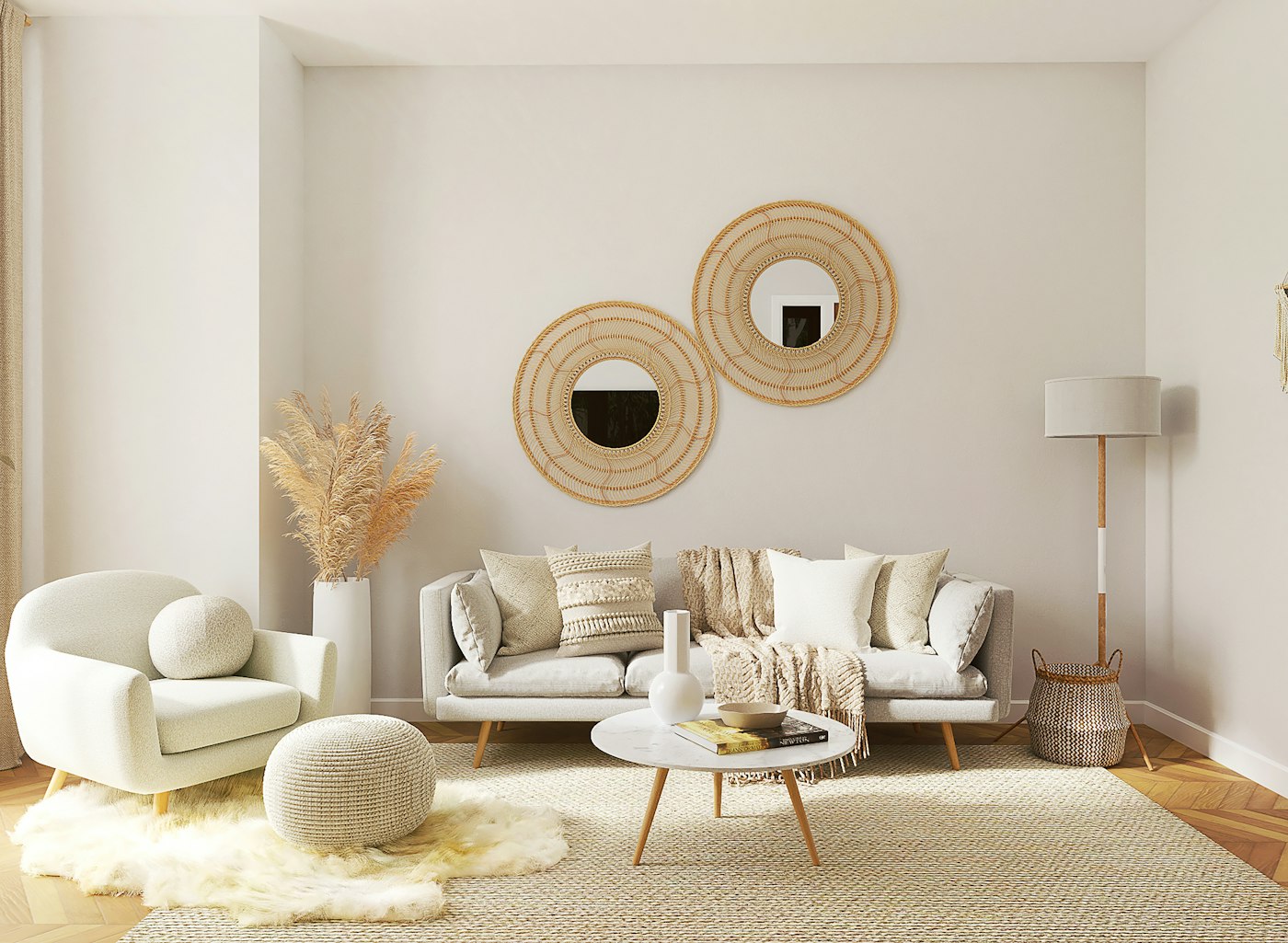
The short answer
- Minimalist means deliberate, not sparse. An empty room is unfinished, not minimalist.
- Warm neutrals with visible texture read as calm. Flat cool white reads as a waiting room.
- Fewer, larger objects beat many small ones — in art, decor and furniture.
- Edit what you own before you buy anything. Most of the work is subtraction.
- The commonest mistake isn’t clutter. It’s a room stripped bare with nothing warm left in it.
What actually makes decor “minimalist” (not just empty)
Most people picture the same thing: white walls, a grey sofa, one plant, nothing on any surface. That room isn’t minimalist. It’s unfurnished, and it’s why so many people try this style, end up with somewhere that feels like a rented flat between tenants, and conclude minimalism isn’t for them.
The defining quality is intention, not absence. A minimalist room isn’t one with few things in it — it’s one where every item is there for a reason you could explain. Fewer objects is a consequence of that, not the goal.
Three things do the actual work:
- Negative space is a material. The empty parts of a wall or shelf aren’t gaps waiting to be filled; they’re what makes the occupied parts read clearly. A single vase on an otherwise clear console is a decision. Five things on the same console is a storage solution.
- Texture replaces visual variety. When you reduce the number of objects and colors, texture carries the room — linen, wool, unglazed ceramic, wood grain, a woven rug. This is the single biggest difference between a warm minimalist room and a cold one, and it’s the part most people skip.
- Fewer, larger, better. One large artwork instead of a gallery wall of twelve. One good throw rather than four cushions. Scale does the work that quantity was doing.
A useful test: could you remove any object in the room without the room feeling worse? If yes, it’s decoration by default. If no, you’re already there. And if the room feels cold rather than calm, the answer is almost never “remove more” — it’s texture.
Minimalist color palettes that don’t feel sterile
Palette is where most minimalist rooms go wrong, and the culprit is usually a single choice: bright, cool, flat white on everything.
Work with warm neutrals instead. Oat, cream, bone, greige, sand, clay, soft taupe. They photograph less crisply than brilliant white, which is exactly why showroom photos favour cool tones — but they live far better. Warm neutrals hold daylight in a way that reads as calm rather than clinical.
A palette that reliably works:
| Role | Share of room | What it covers |
|---|---|---|
| Base | ~60% | Walls and large surfaces — a warm off-white or soft neutral |
| Secondary | ~30% | Large furniture and textiles — one or two steps deeper than the base |
| Accent | ~10% | One colour, repeated 2–3 times — clay, olive, black, deep brown |
Two rules matter more than the specific colours.
Keep undertones consistent. Mixing warm-based and cool-based neutrals is what makes a room feel subtly wrong without anyone being able to say why. Hold paint chips and fabric swatches side by side in daylight — a beige with a pink undertone next to one with a green undertone will fight, even though both are “beige.”
Repeat your accent at least twice. A single black lamp in an otherwise neutral room looks like an accident. The same black in a lamp, a picture frame and a throw reads as deliberate. Repetition is what converts a colour into a decision.
If the room already feels cold
Don’t add more colour — add more texture in the colours you already have. A linen curtain, a wool throw, a jute rug and an unglazed ceramic piece will warm a room far more than a bright cushion will, and none of them disturb the palette.
Minimalist decor room by room
Living room
The room with the most surfaces, so the most opportunity to drift.
- Sofa with visible legs. Seeing the floor continue underneath keeps the room feeling open. Solid-to-the-floor pieces read as heavy.
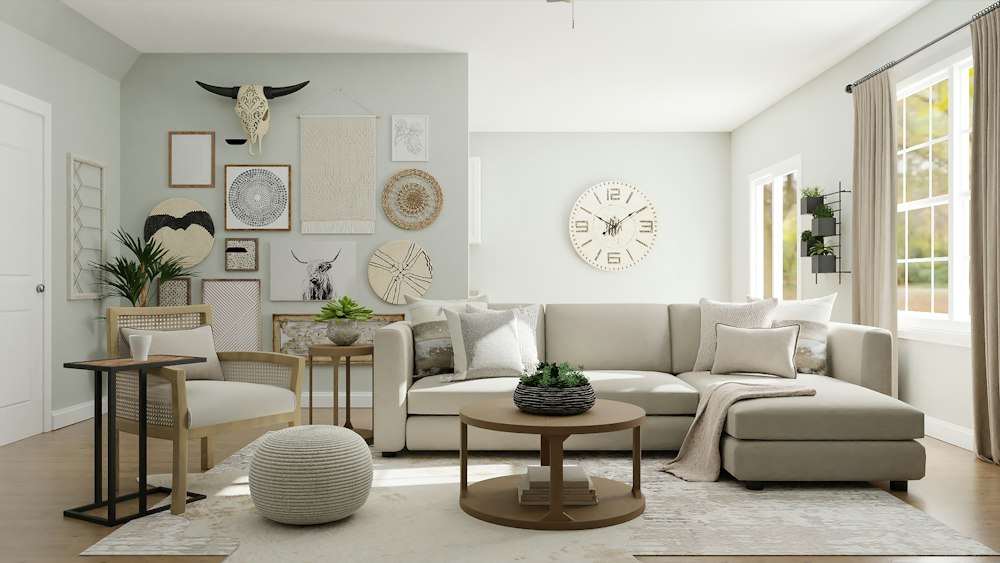
- One large artwork positioned at eye level, rather than a gallery wall. If you already own several small pieces, hang the best one and store the rest.
- Coffee table: two objects maximum. A tray and one other thing. The tray matters — it turns a small collection into a single deliberate unit.
- Cushions in one or two fabrics, in the palette, in odd numbers. Three well-chosen cushions beat six.
- Hide the technology. Cables, routers and speakers undo a calm room faster than any ornament. A cable box behind the media unit is the cheapest upgrade here.
- One rug, sized correctly. Too small is the most common error — the front legs of your seating should sit on it.
If floor space is tight, layout comes before styling — organizing a small apartment covers zoning and furniture scale, which decide whether any of this reads properly.
Bedroom
The easiest room to get right, because it has the fewest functions to serve.
- Bedding in one colour family, in natural fibres. Washed linen or cotton percale, with texture doing the visual work instead of pattern.
- Clear both bedside tables. A lamp, a book, one small object. Nothing else has a permanent home there.
- Nothing above the headboard, or one piece. Empty wall above the bed is restful, not unfinished.
- Take the room’s storage out of sight. Visible storage bins are the enemy of a calm bedroom — under-bed or wardrobe, not on display.
- Layer the lighting. A bedroom lit only by a ceiling fixture will never feel calm. Two lower light sources change it entirely.
- Curtains hung high and wide — rod near the ceiling, extending past the frame. Free if you already own them, and it makes the whole room read taller.
Kitchen
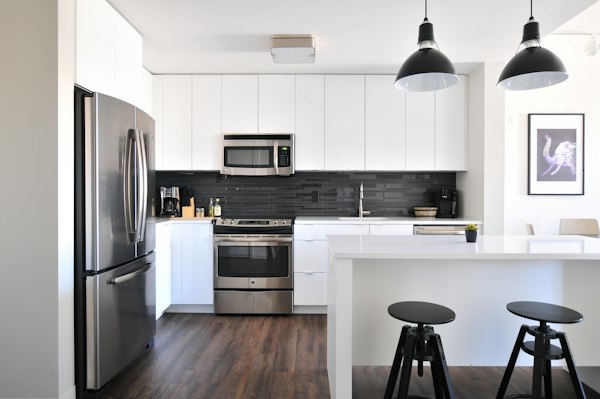
Kitchens resist minimalism because everything in them is functional and used often. The aim isn’t a bare kitchen — it’s one where the working items are the visible ones.
- Clear the counters of anything not used daily. This one change does more than every other idea on this page combined.
- Open shelving works only with restraint. It’s storage and decor at once, which makes it powerful and unforgiving — matching dishes and glassware, nothing crowded, no mixed packaging.
- Decant what stays out. Branded packaging is the main source of visual noise in a kitchen. Oil, dry goods and cleaning liquids in plain containers change the whole room.
- One wooden board or a single ceramic piece as the only non-functional object.
- Remove magnets and paper from the fridge door. It’s the largest flat surface in most kitchens and it’s usually the busiest.
Where storage and decor overlap, what’s inside the cupboards matters as much as what’s on show — our guide to home organization systems covers what’s worth buying.
Budget-friendly minimalist decor
Here’s the part the inspiration accounts leave out: minimalist decor is mostly subtraction, and subtraction is free. The look sells expensively because photographed versions use expensive furniture — but the actual mechanism is removal, and you can do most of it this weekend for nothing.
In order of return per pound spent:
- Edit what you already own. Take everything off every surface, then put back only what earns its place. Most rooms are 70% of the way there after this, at zero cost. Start with the room-by-room decluttering guide if the volume is the problem rather than the styling.
- Shop your own home. Move things between rooms. The vase that looks cluttered on a busy shelf often looks deliberate alone on a clear one.
- Paint. The cheapest transformative change there is. One warm neutral across the walls unifies a room that’s fighting itself.
- Textiles next. Curtains, a throw, a rug. These bring the warmth that stops a stripped-back room feeling cold, and they’re the cheapest route to texture.
- Then, and only then, one good piece. Having removed everything unnecessary, you’ll know exactly what’s missing. Buying at this stage is targeted rather than hopeful.
Secondhand suits this style unusually well, because you’re buying few things and can afford to wait for the right one. Solid wood furniture from the 60s and 70s is widely available, better made than most new equivalents, and already in the warm neutral palette.
For a fuller breakdown of where money is and isn’t worth spending, see our budget home refresh guide.
Common minimalist decor mistakes
- Cold instead of calm. Almost always a texture problem, not a colour problem. Flat surfaces, synthetic fabrics and one overhead light will make any palette feel clinical.
- Matching everything exactly. A furniture set in one wood and one finish reads as a showroom, not a home. Vary tone and material while keeping undertones consistent.
- Over-editing. Stripping a room to nothing isn’t the finish line. If a room feels unfinished, it probably is — add one textile and one object with some age to it.
- Visible storage containers. Bins and baskets on open shelves look organized, not minimalist. Storage should be closed or genuinely beautiful.
- Ignoring lighting. A single ceiling light flattens a room and darkens the corners, which undoes the airiness the whole style depends on.
- Objects that are too small. Tiny decor on a large wall or surface reads as clutter. When in doubt, scale up and reduce the count.
- Buying a “minimalist starter kit.” Buying new things to look like you own fewer things is the contradiction at the heart of most minimalist decor shopping.
Common questions
Is minimalist decor expensive?
The look is marketed expensively; the method isn’t. The core moves — removing, reorganizing, painting, clearing surfaces — cost nothing or close to it. What costs money is skipping straight to replacing furniture, which is also the step most likely to be wrong, because you don’t yet know what the room needs.
How do I make a rental feel minimalist?
Focus on what you can remove and what you can bring. You usually can’t repaint or change the flooring, but you can strip surfaces, swap curtains, add a large rug over unappealing floors, and use freestanding pieces in your palette. A large rug and full-length curtains will override a surprising amount of landlord beige, and both move house with you.
Can a small apartment be minimalist?
It suits one, but the reasoning is inverted. In a large room minimalism is aesthetic; in a small one it’s structural, because there’s no space for anything that isn’t earning its place. Scale is the thing to watch — small rooms need fewer and larger pieces, not more small ones. Our small apartment guide covers the layout side.
Do I have to get rid of sentimental things?
No. Minimalism as a decor style is about what’s on display, not what you own. Keep what matters, store most of it, and rotate a few pieces into view. Objects with history are frequently what stops a minimalist room feeling like a hotel.
More on decluttering, small spaces and decor is in the Home & Living pillar.

Tayiba Shabir
Tayiba writes LifestyleRoot’s home and living guides — decluttering, minimalist decor, and making small spaces work harder.
Related guides
How to organize a small apartment
Layout and scale come before styling when floor space is the constraint.
How to declutter your home, room by room
Do this first. Most of minimalist decor is subtraction, and subtraction is free.
Decluttering methods, compared
Where minimalism differs from KonMari, and which one you actually want.