30-day pull-up challenge
Two tracks: one to build toward your first pull-up, one to add reps if you already have a few. Fifteen sessions over 30 days with a rest day between each. You’ll need a pull-up bar — or a table, if you don’t have one.
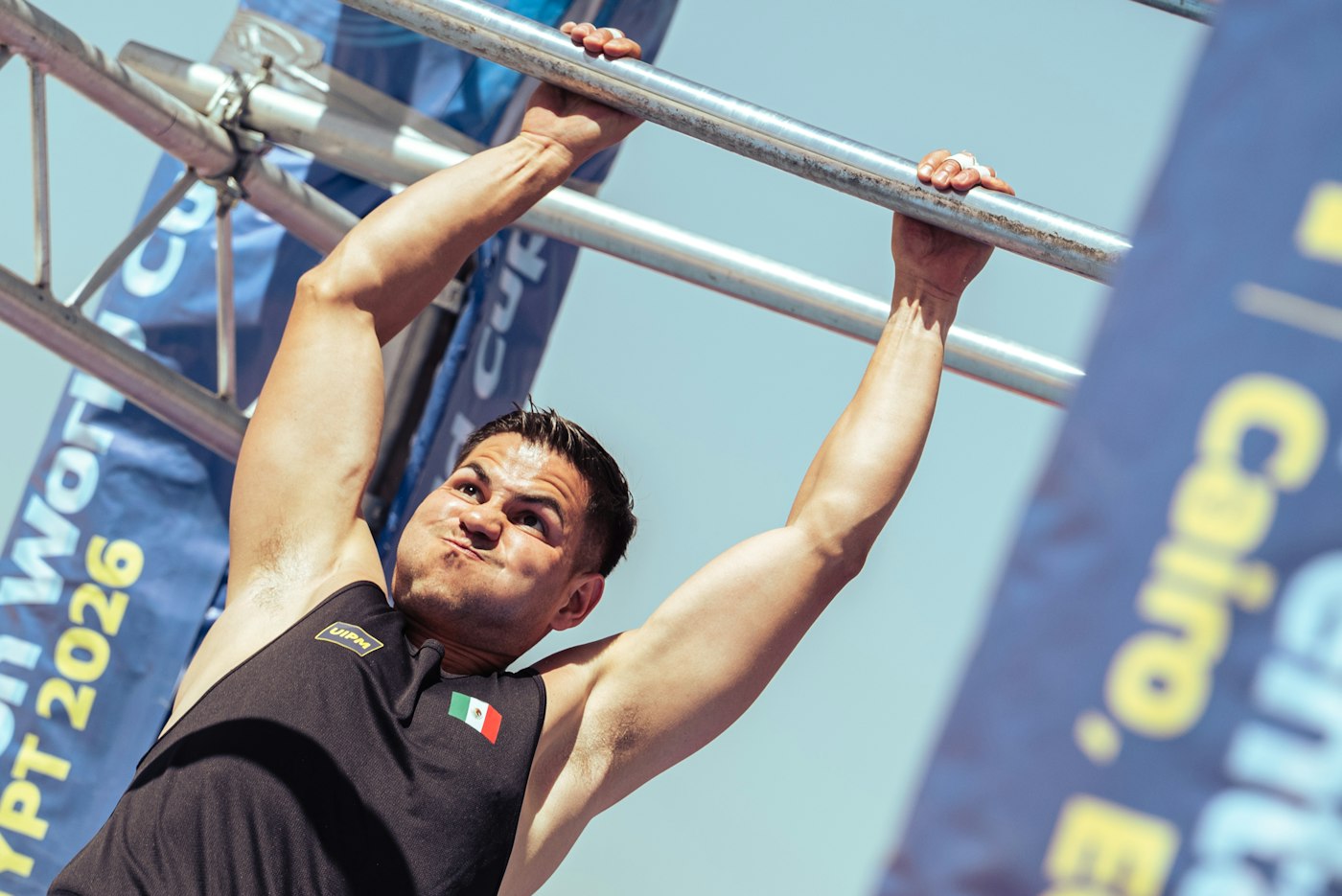
A pull-up is the one bodyweight movement where plenty of healthy, reasonably fit adults can do exactly zero. That’s not a fitness failure but a strength-to-bodyweight problem — and it’s why this plan has two tracks rather than one chart assuming you can already do reps.
One thing to say now rather than at the end: a first pull-up often takes longer than 30 days. Two or three months is common, especially starting from no pulling strength at all. What 30 days reliably gives you is a much longer hang, a much better negative, and a clear sense of how far off you are. Those are real wins, and the plan is built to produce them.
Before you start
General information only, not medical advice. Check with a doctor before starting, especially if you’re pregnant or postpartum, injured, have a shoulder or elbow problem, have a medical condition, or take medication. Make sure your bar is secure and rated for your weight. Stop if you feel sharp pain — see who should modify or skip this below.
Challenge at a glance
| Duration | 30 days, 15 sessions |
|---|---|
| Session time | About 10 minutes |
| Equipment | A pull-up bar, or a sturdy table for rows. A resistance band helps |
| Training pattern | Odd days only — a rest day between every session |
| Tracks | A — not yet one pull-up · B — rep building |
| Realistic goal | A longer hang and a controlled negative, and for some people a first rep |
Pick your track
Hang from the bar and try one pull-up: chin clearly over the bar, no swinging, starting from straight arms.
- Zero reps — Track A. You’ll build pulling strength with hangs, scapular pulls, negatives, rows and band-assisted reps, and attempt a rep on day 30.
- One or more — Track B. You’ll add volume in sets across the month and test your max on day 30.
If you can manage one scrappy rep with a swing, start on Track A anyway — the strength you build there makes it a clean rep, which is worth more than a number.
Pull-ups vs chin-ups
A pull-up uses an overhand grip, palms facing away. A chin-up uses an underhand grip, palms facing you. The chin-up brings your biceps into the movement more, which makes it easier for most people — often by a rep or two.
This plan is written for pull-ups, but chin-ups count. If overhand is a long way off, do the whole challenge with chin-ups and switch next month. Training the version you can do beats stalling on the harder one.
Equipment and setup
- Doorway bar — cheapest. A tension bar wedged in the frame is fine for hangs but shifts under a dynamic pull, so test it with your full weight hanging still before trusting it.
- Wall or ceiling-mounted bar — the most solid, if you can drill. Fix into joists or masonry, never plasterboard alone.
- A playground or outdoor gym bar — free, solid, usually empty early.
- A resistance band looped over the bar, foot or knee in the loop, is the most useful ten pounds you’ll spend for Track A.
- No bar at all? Inverted rows under a sturdy table — lie underneath, grip the edge, pull your chest to it. Same pulling muscles, and enough for most of Track A.
Whatever you use, check the fixing and the weight rating before every session for the first week. A bar coming down with you on it is the one serious injury risk here.
The 30-day pull-up plan
You train on odd days only. Days 2, 4, 6 and every other even day are rest — pulling loads the shoulders and elbows, and training it daily is how people end up with sore tendons instead of a pull-up. Fifteen sessions, a day off between each.
Track A — building toward your first pull-up
| Day | Session |
|---|---|
| 1 | 3 × 10-sec dead hang · 3 × 5 scapular pulls |
| 3 | 3 × 15-sec hang · 3 × 6 scapular pulls |
| 5 | 3 × 20-sec hang · 3 × 8 scapular pulls |
| 7 | 3 × 25-sec hang · 2 × 8 inverted rows |
| 9 | 3 × 30-sec hang · 3 × 8 inverted rows |
| 11 | 3 × 3-sec negatives · 2 × 8 rows |
| 13 | 3 × 4-sec negatives · 3 × 8 rows |
| 15 | 4 × 4-sec negatives · 3 × 10 rows |
| 17 | 4 × 5-sec negatives · 3 × 10 rows |
| 19 | 5 × 5-sec negatives · 3 × 12 rows |
| 21 | 3 × 3 band-assisted pull-ups · 3 × 10 rows |
| 23 | 3 × 4 band-assisted · 2 × 30-sec hang |
| 25 | 3 × 5 band-assisted · 3 × 5-sec negatives |
| 27 | 4 × 4 band-assisted with a lighter band · 2 × 40-sec hang |
| 29 | Light: 2 × 3 band-assisted · one unassisted attempt |
| 30 | Test day — attempt a pull-up, then record your longest dead hang |
A negative means getting your chin above the bar however you can — jump, or step off a chair — then lowering as slowly as the stated count. They’re the most effective exercise for a first pull-up, because you can handle far more weight lowering than lifting.
Track B — adding reps
| Day | Session |
|---|---|
| 1 | 5 sets of 2 (10 total) |
| 3 | 5 sets of 2 (10) |
| 5 | 4 sets of 3 (12) |
| 7 | 5 sets of 3 (15) |
| 9 | 4 sets of 4 (16) |
| 11 | 5 sets of 4 (20) |
| 13 | 6 sets of 3, slow (18) |
| 15 | 5 sets of 5 (25) |
| 17 | 6 sets of 4 (24) |
| 19 | 5 sets of 5, three seconds down (25) |
| 21 | 6 sets of 5 (30) |
| 23 | 7 sets of 4 (28) |
| 25 | 5 sets of 6 (30) |
| 27 | 6 sets of 5 (30) |
| 29 | Light: 3 sets of 3 |
| 30 | Test day — max reps in one set, good form only |
Rest two to three minutes between sets — these are strength sets, not a circuit. If your max is one or two, do sets of one and finish with three negatives. If it’s already over ten, add weight rather than reps.
How to do a pull-up properly
Grip slightly wider than your shoulders, thumbs wrapped. Start from a full hang with straight arms, then set your shoulders — down and back, away from your ears — before you bend an elbow. That first move is what most people skip, and it keeps the work in your back rather than your joints.
Pull your chest toward the bar rather than thinking about your chin, keep your body still, get your chin clearly over, then lower all the way to straight arms under control.
- Swinging or kipping. Momentum turns it into a different exercise. If you can’t do it still, you’re not ready for the unassisted version.
- Half reps. Not reaching a full hang at the bottom is how people plateau — the bottom is the most useful part.
- Shrugging. If your shoulders ride up toward your ears, set them down first; scapular pulls exist to teach exactly this.
- Craning the neck to get the chin over a rep that isn’t there. Count it as a fail and move on.
Easier and harder variations
If you need it easier
- Inverted rows under a table or a low bar — the most useful substitute, and the higher your body, the easier.
- Band-assisted pull-ups, moving to a thinner band as you progress.
- Negatives — slower is harder, so start at three seconds.
- Jumping pull-ups — a small jump to start the movement, then pull.
- Chin-ups instead of pull-ups.
If you need it harder
- Three seconds down on every rep.
- Pause with your chin over the bar for two seconds.
- Added weight — a loaded backpack or a belt.
- Wider grip, which takes the biceps out of it.
- L-sit pull-ups — legs held out in front.
Who should modify or skip this challenge
Speak to a doctor or physiotherapist before day 1 if any of these apply:
- Shoulder pain, impingement, or a history of dislocation — hanging puts the shoulder in a fully loaded overhead position, which is the one to check first
- Elbow pain — tennis and golfer’s elbow both tend to object to pulling volume
- Wrist pain or a grip problem
- Pregnancy or the postpartum period — hanging and bracing both need individual advice
- A recent injury or surgery you haven’t been cleared from, or any condition affecting your joints or blood pressure
Back and arm soreness after a session is normal. Joint pain — shoulder, elbow or wrist — is the signal to stop, because pulling injuries are tendon injuries and they take months rather than days to settle.
What to do if you miss a day
Carry on with the next session. Don’t double up or train two days running to catch up — the rest between sessions is doing as much work as the sessions. Fifteen sessions is the goal, whether they take 30 days or 36.
What to expect from 30 days
Track B can expect a solid jump — pull-ups respond quickly to volume, and most people add two or three to their max over a month.
Track A needs expectations set properly. Some people get a first pull-up by day 30; many don’t, and that tracks body weight and training history more than effort. What nearly everyone gets is a doubled dead hang, a negative they can control for five seconds instead of dropping, and rows gone from eight to a comfortable twelve. That is what getting closer looks like — it just isn’t photogenic.
If day 30 arrives and the rep isn’t there, run the back half again rather than starting over. Negatives and band work are what close the gap, and the second month is usually when it closes.
Printable tracker
Both tracks, 15 sessions each, with somewhere to log your hang time and your day-30 test.
Common questions
How long does it take to do your first pull-up?
It varies too much for a single honest answer. Someone already holding a 30-second hang and doing twelve rows might get there in a few weeks; someone with no pulling strength more often takes two to four months. Body weight matters, because a pull-up lifts all of it. Negatives and assisted reps are what shorten it — not more frequent attempts.
Are pull-ups better than chin-ups?
Neither is better; they emphasise slightly different muscles. Pull-ups lean more on the lats and upper back, chin-ups bring in the biceps, and chin-ups are easier for most people. Train whichever you can do properly today.
Can I do this challenge without a bar?
Most of Track A, yes — inverted rows under a sturdy table build the same muscles and take you a long way. You’ll need a bar eventually, since hangs and negatives bridge the last gap, and a playground bar costs nothing.
Can I train pull-ups every day?
Not at this volume, which is why there’s a rest day between every session. Pulling loads tendons around the shoulder and elbow that recover more slowly than muscle, and daily pulling is the most reliable way to turn a 30-day challenge into a months-long elbow problem.
What to try next
Pulling and pushing belong together, so the 30-day push-up challenge is the obvious pair — and it runs on non-bar days without interfering. The plank challenge builds the bracing that stops a pull-up turning into a swing. For a full-body plan instead of one movement, the 30-day workout challenge.

Tayiba Shabir
Tayiba writes LifestyleRoot’s home, living and habit guides — practical plans you can actually follow, without the hype.
30-Day Pull-Up Challenge Chart
Tick your own track. Train on odd days only — every even day is a rest day, and that rest is doing as much work as the sessions. Rest two to three minutes between sets. Chin-ups count. Check your bar’s fixing and weight rating before every session.
Track A — days 1–15
- 13 × 10s hang · 3 × 5 scap pulls
- 33 × 15s hang · 3 × 6 scap pulls
- 53 × 20s hang · 3 × 8 scap pulls
- 73 × 25s hang · 2 × 8 rows
- 93 × 30s hang · 3 × 8 rows
- 113 × 3s negatives · 2 × 8 rows
- 133 × 4s negatives · 3 × 8 rows
- 154 × 4s negatives · 3 × 10 rows
Track A — days 17–30
- 174 × 5s negatives · 3 × 10 rows
- 195 × 5s negatives · 3 × 12 rows
- 213 × 3 band-assisted · 3 × 10 rows
- 233 × 4 band-assisted · 2 × 30s hang
- 253 × 5 band-assisted · 3 × 5s negatives
- 274 × 4 lighter band · 2 × 40s hang
- 29Light · one unassisted attempt
- 30Test day — attempt + max hang
Track B — days 1–15
- 15 × 2
- 35 × 2
- 54 × 3
- 75 × 3
- 94 × 4
- 115 × 4
- 136 × 3, slow
- 155 × 5
Track B — days 17–30
- 176 × 4
- 195 × 5, three seconds down
- 216 × 5
- 237 × 4
- 255 × 6
- 276 × 5
- 29Light · 3 × 3
- 30Test day — max reps, one set
Your numbers
| Day 1 | Day 30 | |
|---|---|---|
| Dead hang | ||
| Slowest controlled negative | ||
| Pull-ups (or chin-ups) in one set | ||
| Inverted rows in one set |
My track: ☐ A (not yet one pull-up) ☐ B (rep building) · Grip: ☐ pull-up ☐ chin-up
No first rep by day 30? Run days 11–29 again — negatives and band work are what close the gap, and the second month is usually when it closes. Stop for joint pain in a shoulder, elbow or wrist. General information only, not medical advice. · lifestyleroot.com/habits-challenge/30-day-pull-up-challenge/