30-day plank challenge
One plank a day for 30 days, starting at 20 seconds and building to a two-and-a-half-minute hold. No equipment, a few minutes a day, easy days built in every fifth day.
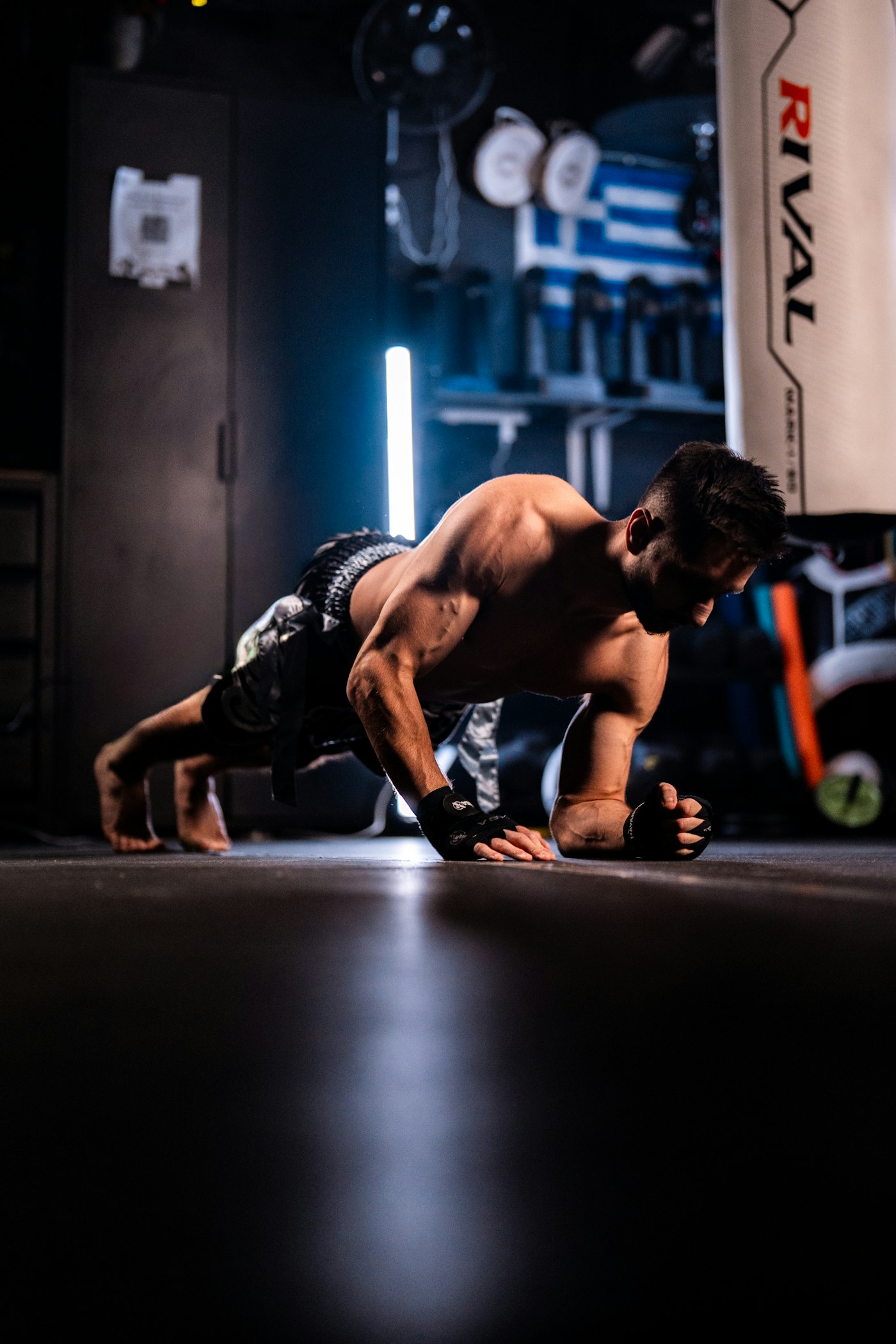
A plank is one position held still. That makes it the simplest challenge to follow and the easiest to do badly — because the only thing you can measure is how long you lasted, and the clock doesn’t know whether your hips were sagging.
So this plan has a number for every day and a rule that outranks it: when your form breaks, the hold is over. Day 1 is 20 seconds, day 30 is 2:30, and every fifth day is easy. No equipment, a few minutes, enough floor to lie down on.
Before you start
This is general information, not medical advice. Check with a doctor before starting, especially if you’re pregnant or postpartum, injured, have a medical condition, or take medication. Stop if you feel sharp pain. Core work in particular needs a green light during pregnancy and after birth — see who should modify or skip this.
Challenge at a glance
| Duration | 30 days |
|---|---|
| Daily time | 1–5 minutes |
| Equipment | None (a mat or rug helps your forearms) |
| Difficulty | Beginner, with modifications both ways |
| Starts at | 20 seconds |
| Finishes at | 2:30 |
| Easy days | Every 5th day (5, 10, 15, 20, 25) |
| Goal | Core endurance and a plank you can hold properly |
How the challenge works
- Hit the day’s hold time in one go if you can. One clean hold is the aim; splitting it is the fallback, not the default.
- Stop when your form breaks, even if the clock hasn’t finished. The second your hips drop or your lower back arches, the plank has stopped working your core and started loading your spine.
- Easy days are part of the plan. Every fifth day drops to a short, comfortable hold rather than nothing — enough to keep the daily habit without accumulating fatigue.
- Scale down instead of skipping. A 40-second knee plank beats a 70-second sagging one, and it beats a missed day by a mile.
- Split it if you have to. Two 45-second holds with a minute between them is a legitimate 90-second day. Note on the chart that you split it, so you can see when you stop needing to.
The 30-day plank plan
| Day | Hold | Day | Hold | Day | Hold |
|---|---|---|---|---|---|
| 1 | 20 sec | 11 | 60 sec | 21 | 1:50 |
| 2 | 25 sec | 12 | 70 sec | 22 | 1:55 |
| 3 | 30 sec | 13 | 75 sec | 23 | 2:00 |
| 4 | 35 sec | 14 | 80 sec | 24 | 2:05 |
| 5 | 20 sec (easy) | 15 | 45 sec (easy) | 25 | 60 sec (easy) |
| 6 | 40 sec | 16 | 85 sec | 26 | 2:10 |
| 7 | 45 sec | 17 | 90 sec | 27 | 2:15 |
| 8 | 50 sec | 18 | 1:40 | 28 | 2:20 |
| 9 | 55 sec | 19 | 1:45 | 29 | 60 sec (easy) |
| 10 | 30 sec (easy) | 20 | 50 sec (easy) | 30 | 2:30 |
Read it down each column: days 1–10, then 11–20, then 21–30.
Day 29 is deliberately light so day 30 isn’t attempted on tired muscles. And day 30 is only ten seconds past day 28 — the target, not a leap. If you’d rather end on a max-effort hold instead of a fixed one, hold as long as your form lasts and write the number down.
If 20 seconds is already hard, start here
Hold a knee plank for 10 seconds on day 1 and follow the same shape — add five seconds each working day, take the same easy days. You’ll finish around 75 seconds on your knees, and you can run the full plan next month from a higher floor. The pattern is the programme; the numbers are just where you’re starting.
How to do a plank properly
Get into position from your forearms, not from a push-up. Elbows under your shoulders, forearms flat and parallel, hands in loose fists or flat on the floor. Feet about hip-width — closer together is harder, wider is more stable.
From there the whole plank is one straight line from the crown of your head to your heels, hips level with shoulders and ankles. Squeeze your glutes, draw your ribs down slightly so your lower back isn’t arching, keep your neck long with your eyes on the floor just ahead of your hands, and breathe steadily throughout.
That’s it — which is why the mistakes matter more than the instructions:
| Mistake | What it means | Fix |
|---|---|---|
| Hips sagging | Core has given out; load is going into your lower back | End the hold. Next time stop five seconds earlier, or drop to knees. |
| Hips raised | You’ve drifted toward a downward dog — easier, but no longer a plank | Lower your hips until shoulders, hips and heels line up. |
| Holding your breath | Bracing by locking your breath rather than engaging your core | Count your breaths out loud instead of counting seconds. |
| Head dropped or craned up | Neck out of line with the spine | Look at the floor just ahead of your hands. |
| Shoulders shrugged to the ears | Upper body doing the work instead of the core | Press your forearms down and widen across your collarbones. |
Set your phone against a wall and film one hold from the side in the first week. A plank almost always looks different from how it feels.
Beginner and advanced modifications
If you need it easier
Reduce the leverage before you reduce the time — a modified plank held for the full duration trains more than a full plank abandoned at half.
- Knee plank — forearms down, knees down, same straight line from head to knees. The single most useful regression.
- Incline plank — forearms on a bench, sofa arm or kitchen counter. The higher your hands, the easier it gets.
- Split sets — two or three shorter holds adding up to the day’s total.
- Wider feet — more base, less wobble.
If you need it harder
- Side planks — add 20–30 seconds each side after the main hold. The obliques get almost nothing from a front plank.
- Plank shoulder taps — from a high plank, tap each shoulder slowly without letting your hips rotate.
- Feet elevated — toes on a low step or sofa edge.
- Weighted — a backpack across your upper back, or a plate if someone can place it for you.
- Longer holds — but past about three minutes a plank mostly tests patience. Harder variations beat extra minutes.
Who should modify or skip this challenge
Speak to a doctor or physiotherapist before day 1 if any of these apply:
- Current or recurring lower back pain
- Shoulder, elbow or wrist pain, or a history of shoulder injury
- Pregnancy — planks are often fine early on and often modified or dropped later, but that call is individual and belongs with your midwife or doctor
- Postpartum — particularly with abdominal separation (diastasis recti) or after a caesarean. A pelvic health physiotherapist is the right first stop, not a 30-day chart
- A recent injury or surgery you haven’t been cleared from
- High blood pressure or a hernia — both are reasons to get an isometric hold checked first
None of this is a blanket no — a physio will usually adjust the movement rather than ban it. But it’s a conversation to have before day 1, not after day 14.
Abdominal and shoulder soreness for a day or two is normal early on. Joint pain, lower back pain, or anything sharp is not — stop and get it looked at.
What to do if you miss a day
Pick up where you left off. Don’t double up — making up a missed 90-second hold with 180 seconds tomorrow is how a challenge turns into a strain. Miss several days and just repeat the last hold you completed before moving on. Thirty sessions is the goal, not thirty consecutive dates.
What to expect from 30 days
Two things, reliably: your plank gets considerably longer, and it gets better. The hold that felt impossible in week one is usually comfortable by week three, and the form corrections above stop being things you think about. Better core endurance then shows up in ordinary ways — carrying shopping, sitting upright at a desk, other exercises feeling more stable.
What a plank challenge will not do is burn belly fat or produce visible abs. You can’t spot-reduce fat from the area you’re training, and a couple of minutes of isometric holding is a small energy cost. What you see at the waist is a function of overall nutrition and total activity over far longer than a month. A plank trains the muscle underneath regardless of what’s over it — worth doing on its own terms, and worth not overselling.
The other return: 30 days of a one-minute commitment builds the habit of showing up daily, which transfers to whatever you do next.
Printable tracker
Tick each day as you finish it, and note your actual hold when you have to stop early — that record is more useful than the plan.
Common questions
Is it okay to plank every day?
For most healthy people, yes — a plank is low-impact and brief, which is why this plan runs daily with an easy day every fifth day rather than full rest. If you’re sore enough that your form slips in the first ten seconds, take a proper rest day. That’s a sensible adjustment, not a broken streak.
How long is a good plank?
A clean 60-second hold is a solid benchmark for most people, and two minutes in good form is strong. Past that, you’re mostly training tolerance for being uncomfortable — side planks, elevated feet or added weight give you more than extra minutes do. Twenty seconds held perfectly is worth more than a minute spent sagging.
Why does my lower back hurt when I plank?
Almost always because your hips have dropped and your lower back is arching to compensate, moving the load from your abdominals to your spine — a sign you’ve gone past the end of your useful hold. Shorten the time, switch to a knee or incline plank, and focus on squeezing your glutes and keeping your ribs down. If your back hurts from the first second, or the pain continues afterwards, stop and get it assessed.
Does the 30-day plank challenge actually work?
For what it measures, yes — follow the chart and your plank will be dramatically longer and better at the end of the month. If “work” means a flatter stomach, no: see the section above on what to realistically expect.
Should I do anything else alongside it?
A front plank holds your trunk in one static position, so if this is your only exercise, adding something for your legs makes for a far more balanced month. The 30-day squat challenge runs on the same format, so the two stack easily.
What to try next
The natural pairing is lower body, which the 30-day squat challenge covers in the same day-by-day format. Broader core work and a push-up progression are being added to this section — the weekly email is the simplest way to catch them.

Tayiba Shabir
Tayiba writes LifestyleRoot’s home, living and habit guides — practical plans you can actually follow, without the hype.
30-Day Plank Challenge Chart
Tick each day as you finish it. End the hold the moment your form breaks and write down what you actually managed — that number is the real record. Easy days count; don’t skip them.
Days 1–8
- 120 sec
- 225 sec
- 330 sec
- 435 sec
- 520 sec (easy)
- 640 sec
- 745 sec
- 850 sec
Days 9–16
- 955 sec
- 1030 sec (easy)
- 1160 sec
- 1270 sec
- 1375 sec
- 1480 sec
- 1545 sec (easy)
- 1685 sec
Days 17–24
- 1790 sec
- 181:40
- 191:45
- 2050 sec (easy)
- 211:50
- 221:55
- 232:00
- 242:05
Days 25–30
- 2560 sec (easy)
- 262:10
- 272:15
- 282:20
- 2960 sec (easy)
- 302:30 — target hold
Starting lower? Knee plank, 10 sec on day 1, add 5 sec each working day. · Stop if you feel sharp pain. General information only, not medical advice. · lifestyleroot.com/habits-challenge/30-day-plank-challenge/