30-day sit-up challenge
One daily sit-up total, climbing from 10 to 85 over 30 days, with partial and assisted versions for anyone who can’t do a full sit-up yet. A few minutes a day, no equipment, rest days built in.
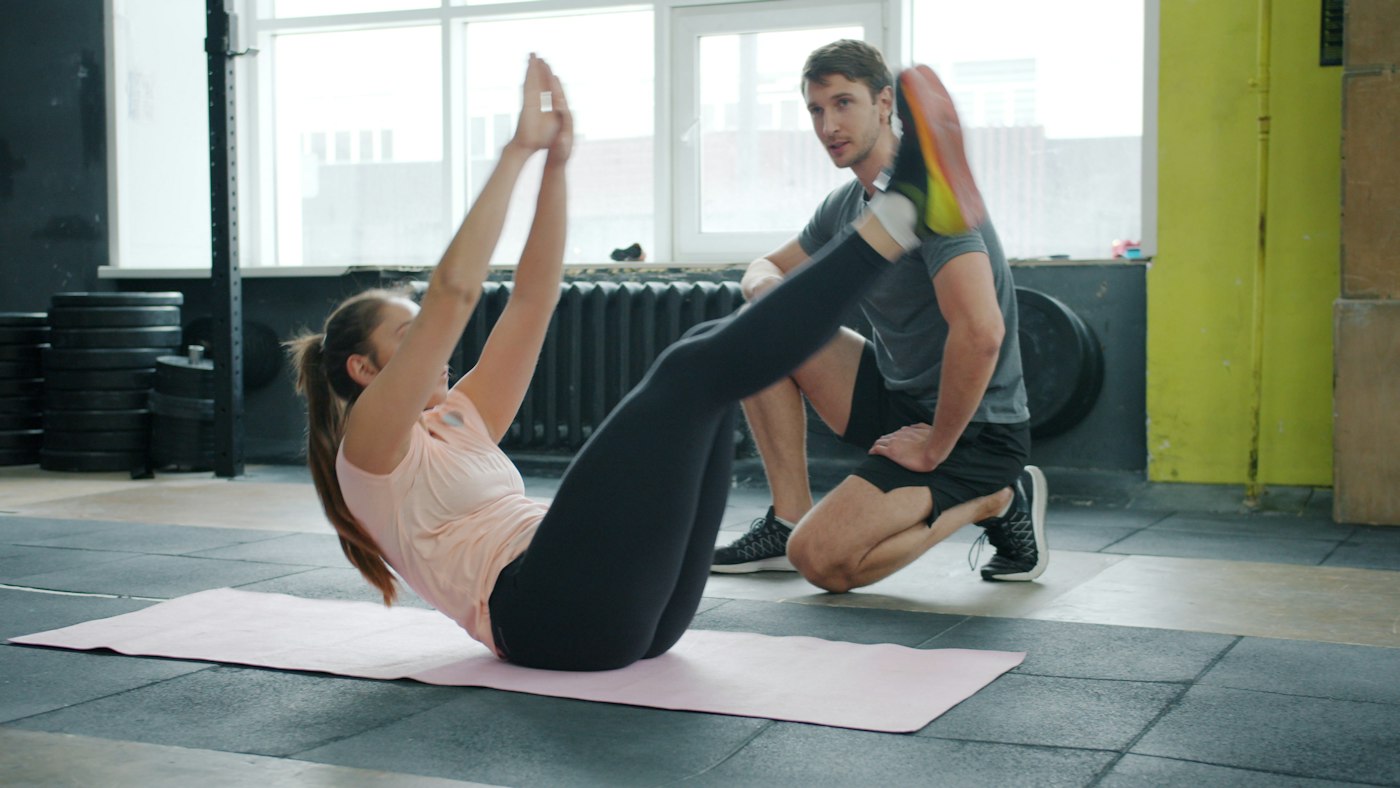
A sit-up is the full movement: shoulders off the floor, all the way up until your torso is close to your thighs, then back down under control. That extra range is what makes it harder than a crunch — and also what makes it uncomfortable for some people’s lower backs, which is worth sorting out before day 1 rather than on day 9.
The plan below runs from 10 reps to 85 over 30 days, with a rest day every fifth day. You need a few minutes and a bit of floor; a mat helps.
Before you start
General information only, not medical advice. Check with a doctor before starting, especially if you’re pregnant or postpartum, injured, have a medical condition, or take medication. Stop if you feel sharp pain, especially in your neck or lower back — see who should modify or skip this below.
Challenge at a glance
| Duration | 30 days |
|---|---|
| Daily time | 3–10 minutes |
| Equipment | None (a mat or rug helps) |
| Starts at | 10 sit-ups |
| Finishes at | 85 sit-ups |
| Versions | Partial, assisted or full |
| Rest days | Days 5, 10, 15, 20 and 25 |
Sit-ups vs crunches: which should you do?
They’re the same idea at two different ranges, and the difference matters more than most people assume.
| Sit-up | Crunch | |
|---|---|---|
| Range | All the way up to your thighs | Shoulders off the floor, maybe 30 degrees |
| Mainly works | Abdominals plus a lot of hip flexor | Abdominals, with little hip flexor |
| Lower back | More load; uncomfortable for some people | Generally gentler |
| Best for | Endurance and a bigger movement to measure | Isolating the abdominals with less strain |
Neither is the correct answer for everyone. Sit-ups are perfectly fine for a lot of people and give you a satisfying number to improve. But because the second half of the movement pulls heavily on the hip flexors, which attach to the lower spine, people with sensitive lower backs often feel sit-ups in a way they don’t feel crunches.
So: if sit-ups feel fine, this is your plan. If they don’t — or if your back is the reason you’re asking — the 30-day abs challenge is built on crunches and reverse crunches instead, and the 30-day plank challenge trains the same muscles with no spinal movement at all.
Find your starting level
Do as many controlled sit-ups as you can — all the way up, all the way down, no bouncing, no yanking your head. Stop when the control goes. That number picks your version:
| Controlled sit-ups | Your version |
|---|---|
| Fewer than 5 | Partial — come up halfway, where your control still holds, and lower slowly |
| 5 to 12 | Assisted — anchor your feet under a sofa, or push lightly off your thighs |
| More than 12 | Full — unassisted, feet flat and free |
Everyone follows the same rep numbers — you just do them in your version, because a partial sit-up is easier per rep. Re-test around day 15 and move up a version if you’ve earned it; that’s usually the most satisfying moment of the month.
The 30-day sit-up plan
| Day | Sit-ups | Day | Sit-ups | Day | Sit-ups |
|---|---|---|---|---|---|
| 1 | 10 | 11 | 28 | 21 | 54 |
| 2 | 12 | 12 | 30 | 22 | 58 |
| 3 | 14 | 13 | 33 | 23 | 62 |
| 4 | 16 | 14 | 36 | 24 | 66 |
| 5 | Rest | 15 | Rest | 25 | Rest |
| 6 | 18 | 16 | 40 | 26 | 70 |
| 7 | 20 | 17 | 43 | 27 | 74 |
| 8 | 22 | 18 | 46 | 28 | 78 |
| 9 | 25 | 19 | 50 | 29 | 40 (light) |
| 10 | Rest | 20 | Rest | 30 | 85 |
Read down each column: days 1–10, then 11–20, then 21–30. Day 29 is deliberately light so day 30 doesn’t land on a tired core, and 85 is only seven past day 28 rather than a leap.
Split the day’s total into as many sets as you like — eight sets of ten is the same as 80, and keeps the form far better than one long grind. Day 15 is a rest day, which makes it the natural place to re-test your level.
How to do a sit-up properly
Lie on your back, knees bent at roughly 90 degrees, feet flat and about hip-width apart. Cross your arms on your chest — not behind your head, which is where the neck-pulling starts. Curl up, leading with your chest rather than your chin, until your torso is close to your thighs. Then lower slowly, all the way down, rather than dropping. Breathe out on the way up, in on the way down.
Four mistakes account for almost all sit-up problems:
- Pulling on your neck. If your hands are laced behind your head, they will eventually start dragging. Cross them on your chest and the problem disappears.
- Using momentum. Swinging your arms or bouncing off the floor moves the work away from your abdominals and into your lower back. Slow enough to stop halfway.
- Feet lifting. If your heels come off the floor, your hip flexors are doing most of it. Anchoring your feet is a legitimate fix, not cheating.
- Lower back arching on the way down. Lower under control and keep your ribs drawn toward your hips. If it still arches, switch to partials for a week.
Easier and harder variations
If you need it easier
- Partial sit-ups — go only as far as your control holds, and let the range grow over the month.
- Anchored feet — under a sofa or a heavy chair.
- A light push off your thighs with your hands at the hardest point.
- Smaller sets — sets of five across the day rather than sets of twenty.
- A rolled towel under your lower back for support.
If you need it harder
- Slow tempo — three seconds up, three down. The most effective upgrade, and it adds no reps.
- Pause at the top for two seconds on every rep.
- Arms overhead rather than crossed, which lengthens the lever.
- Hold a weight — a book or water bottle at your chest.
- Decline sit-ups, if you have a bench or a sturdy step.
Who should modify or skip this challenge
Speak to a doctor or physiotherapist before day 1 if any of these apply:
- Lower back pain, current or recurring — sit-ups are one of the more likely core exercises to aggravate it, and the plank or crunch-based plans are usually the better starting point
- Neck problems, since the neck is the other place sit-ups go wrong
- Pregnancy — sit-ups are commonly dropped as pregnancy progresses; ask your midwife or doctor rather than adapting the chart yourself
- Postpartum, especially with abdominal separation (diastasis recti) or after a caesarean — see a pelvic health physiotherapist first
- A hernia, or recent abdominal or spinal surgery
Abdominal soreness for a day or two after starting is normal. Lower back or neck pain is not — stop and get it assessed rather than working around it.
What to do if you miss a day
Carry on from where you stopped. Don’t double up — 150 sit-ups in one session to make up for yesterday is a reliable way to be too sore to continue. Miss several days and repeat your last completed day. Thirty sessions is the goal, not thirty consecutive dates.
What to expect from 30 days
Your sit-up number will go up a lot, and the reps will look better — that’s the measurable result, and from a low base it tends to be a big jump. You’ll also get real core endurance, which shows up in ordinary ways: sitting upright for longer, feeling steadier in other exercises.
What sit-ups won’t do is remove fat from your middle. You can’t spot-reduce fat from the area you’re training, and whether abs are visible depends mostly on overall body fat, which comes down to nutrition and total activity across months rather than any 30-day plan. A sit-up challenge trains the muscle underneath regardless of what’s over it — worth doing on its own terms, and worth not overselling. The abs challenge covers that question in more detail.
Printable tracker
Tick each day as you finish it, and note your version and your day-15 re-test.
Common questions
Are sit-ups bad for your back?
Not inherently — plenty of people do them for years without trouble. But the full range loads the lower spine more than a crunch does, so they’re more likely than most core exercises to aggravate an existing back problem, and some organisations have moved away from recommending them for that reason. The sensible position is neither “dangerous” nor “harmless”: if sit-ups feel fine and your form is controlled, carry on; if your lower back complains, that’s a signal to switch to crunches, reverse crunches or planks rather than to push through.
How many sit-ups a day is good?
There’s no universal number — it depends on your starting point and which version you’re doing. This plan runs 10 to 85 across the month, which suits most beginners. Thirty controlled full sit-ups a day is a solid habit; fifty rushed ones with a yanked neck is worse than twenty good ones.
Should I do sit-ups every day?
Most days is fine for most healthy people at these volumes, which is why this plan takes a rest day every fifth day rather than running straight through. If you’re sore enough that your form slips in the first few reps, take an extra day — that’s good judgement, not a broken streak.
Can I do this with the abs challenge at the same time?
Better not to — the abs plan already includes crunch work, and running both would be a lot of daily core volume with no rest. Do them back to back instead, or pair this with the squat challenge for something that trains a different part of you.
What to try next
For a broader core routine rather than one movement, the 30-day abs challenge rotates five exercises. For core work with no spinal movement, the 30-day plank challenge. And if you’d rather train everything than specialise, the 30-day workout challenge is the full-body plan these all sit under.

Tayiba Shabir
Tayiba writes LifestyleRoot’s home, living and habit guides — practical plans you can actually follow, without the hype.
30-Day Sit-Up Challenge Chart
Everyone follows the same numbers in their own version — partial (halfway up), assisted (feet anchored) or full. Split the total into as many sets as you like, and end a set when your control goes. Re-test on day 15 and move up a version if you’ve earned it. Arms crossed on your chest, never laced behind your head.
Days 1–8
- 110 sit-ups
- 212 sit-ups
- 314 sit-ups
- 416 sit-ups
- 5Rest
- 618 sit-ups
- 720 sit-ups
- 822 sit-ups
Days 9–16
- 925 sit-ups
- 10Rest
- 1128 sit-ups
- 1230 sit-ups
- 1333 sit-ups
- 1436 sit-ups
- 15Rest & re-test your version
- 1640 sit-ups
Days 17–24
- 1743 sit-ups
- 1846 sit-ups
- 1950 sit-ups
- 20Rest
- 2154 sit-ups
- 2258 sit-ups
- 2362 sit-ups
- 2466 sit-ups
Days 25–30
- 25Rest
- 2670 sit-ups
- 2774 sit-ups
- 2878 sit-ups
- 2940 sit-ups (light)
- 3085 sit-ups
My version on day 1: ☐ partial ☐ assisted ☐ full · After the day-15 re-test: ☐ partial ☐ assisted ☐ full
Stop if you feel sharp pain, especially in your neck or lower back. If your lower back complains, switch to crunches, reverse crunches or planks rather than pushing through. General information only, not medical advice. · lifestyleroot.com/habits-challenge/30-day-sit-up-challenge/