30-day workout challenge
A complete full-body plan: short daily workouts rotating lower body, upper body, cardio and core, with one rest day and one easy day every week. About 20–30 minutes a day, no gym, no equipment.
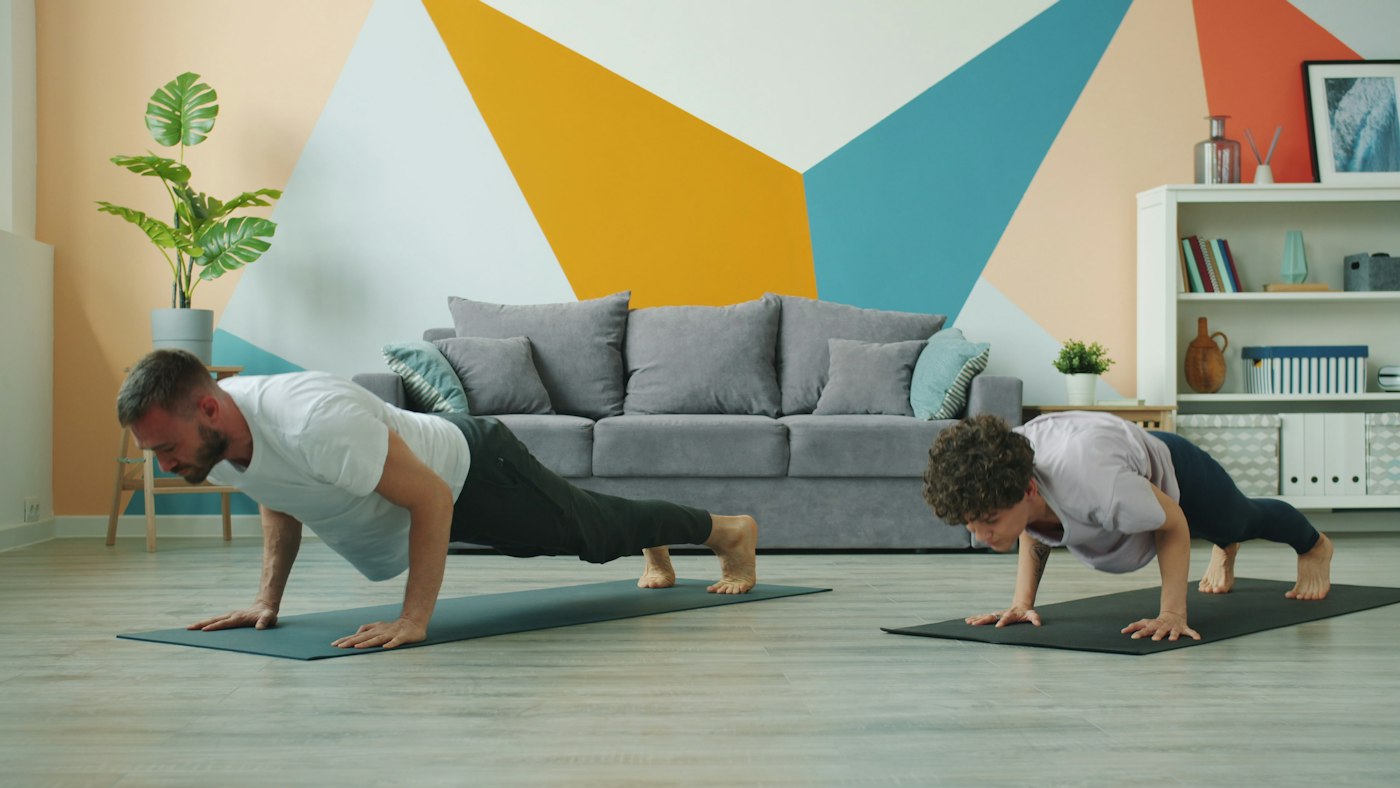
This is the full-body version of a 30-day challenge: not one exercise repeated for a month, but a rotation that covers your legs, upper body, core and some cardio across each week. It takes about 20 to 30 minutes a day, needs no equipment, and has a rest day and an easy day built into every week.
It suits beginners and anyone coming back after a break. If you’d rather commit to one exercise and get properly good at it, the single-skill challenges further down are the better route.
Before you start
General information only, not medical advice. Check with a doctor before starting, especially if you’re pregnant or postpartum, injured, have a medical condition, take medication, or haven’t exercised in a long time. Stop if you feel sharp pain. See who should modify or skip this below.
Challenge at a glance
| Duration | 30 days |
|---|---|
| Daily time | 20–30 minutes, including warm-up |
| Equipment | None. A mat and a sturdy chair help |
| Difficulty | Beginner to intermediate, two levels |
| Weekly pattern | Lower · upper · cardio · rest · core · full body · easy |
| Rest days | Days 4, 11, 18 and 25, plus an easy day each week |
| Goal | A routine you keep, and a baseline you can measure |
How the challenge works
- Do the day’s workout as a circuit — one set of each exercise in order, then repeat for the number of rounds listed. Rest 30 to 60 seconds between exercises and a minute between rounds.
- Warm up first, every time. Five minutes, and it’s the least negotiable part of the plan — see the routine below.
- Rest days are part of the plan. Muscles adapt during recovery, so training through a rest day makes the month harder without making it more effective.
- Form beats numbers. If a rep gets sloppy, that set is finished. Twelve good squats beat twenty rushed ones, and rushed reps are where people get hurt.
- Scale down rather than skip. Fewer rounds, fewer reps, easier variations — a reduced day counts. A missed day doesn’t.
Pick your level
Two ways through the same plan:
- Beginner — do two rounds of everything for the whole 30 days, use the easier variations below, and take longer rests. Ignore the round counts in the table.
- Intermediate — follow the table as written, including the move to three rounds in week three.
And a third option that isn’t a level: if what you actually want is to get good at one thing rather than cover everything, pick a single-skill challenge instead. A month of focused squats will do more for your squat than a month of this will.
The weekly structure
Each week runs the same seven-day rhythm, with the numbers climbing:
| Day 1 | Lower body strength |
|---|---|
| Day 2 | Upper body strength |
| Day 3 | Cardio intervals |
| Day 4 | Rest |
| Day 5 | Core |
| Day 6 | Full body |
| Day 7 | Easy — a walk and a stretch |
That shape isn’t arbitrary. It puts strength work on four days a week and keeps hard days apart, so legs aren’t asked to work twice in a row. It also lands roughly where general activity guidance for adults sits: the CDC’s recommendation is 150 minutes of moderate-intensity activity a week plus at least two days of muscle-strengthening activity, and a week of this plus the easy-day walk clears both.
The 30-day workout plan
“×2” and “×3” are rounds of the whole circuit. Push-ups mean whatever version you can do in good form — wall, incline, knees or full.
| Day | Focus | Workout |
|---|---|---|
| Week 1 | ||
| 1 | Lower | 12 squats · 10 lunges each leg · 12 glute bridges · 20 calf raises ×2 |
| 2 | Upper | 8 push-ups · 10 chair dips · 10 supermans · 20-sec plank ×2 |
| 3 | Cardio | 30 sec each: high knees · step jacks · mountain climbers · toe taps ×4 |
| 4 | Rest | Rest |
| 5 | Core | 12 dead bugs · 20 bicycle crunches · 25-sec plank · 15-sec side plank each side ×2 |
| 6 | Full body | 12 squats · 8 push-ups · 20 mountain climbers · 10 glute bridges ×3 |
| 7 | Easy | 20–30 minute walk + 5 minutes of stretching |
| Week 2 — same rhythm, more reps | ||
| 8 | Lower | 15 squats · 12 lunges each leg · 15 glute bridges · 25 calf raises ×2 |
| 9 | Upper | 10 push-ups · 12 chair dips · 12 supermans · 30-sec plank ×2 |
| 10 | Cardio | 40 sec each, same four moves ×4 |
| 11 | Rest | Rest |
| 12 | Core | 14 dead bugs · 24 bicycle crunches · 35-sec plank · 20-sec side plank each side ×2 |
| 13 | Full body | 15 squats · 10 push-ups · 24 mountain climbers · 12 glute bridges ×3 |
| 14 | Easy | 30 minute walk + stretching |
| Week 3 — three rounds | ||
| 15 | Lower | 15 squats · 12 lunges each leg · 15 glute bridges · 25 calf raises ×3 |
| 16 | Upper | 10 push-ups · 12 chair dips · 12 supermans · 35-sec plank ×3 |
| 17 | Cardio | 45 sec each, same four moves ×4 |
| 18 | Rest | Rest |
| 19 | Core | 16 dead bugs · 28 bicycle crunches · 40-sec plank · 25-sec side plank each side ×3 |
| 20 | Full body | 18 squats · 12 push-ups · 28 mountain climbers · 15 glute bridges ×3 |
| 21 | Easy | 30–40 minute walk + stretching |
| Week 4 — the hardest week | ||
| 22 | Lower | 18 squats · 14 lunges each leg · 18 glute bridges · 30 calf raises ×3 |
| 23 | Upper | 12 push-ups · 15 chair dips · 15 supermans · 45-sec plank ×3 |
| 24 | Cardio | 50 sec each, same four moves ×4 |
| 25 | Rest | Rest |
| 26 | Core | 18 dead bugs · 32 bicycle crunches · 50-sec plank · 30-sec side plank each side ×3 |
| 27 | Full body | 20 squats · 14 push-ups · 30 mountain climbers · 18 glute bridges ×3 |
| 28 | Easy | Walk + stretching |
| Finish | ||
| 29 | Light | One easy round of the full-body circuit + 10 minutes of stretching |
| 30 | Test day | Max squats, max push-ups and a max plank hold — one set each, good form only. Write the numbers down. |
Day 29 is deliberately light so day 30 doesn’t land on tired legs, and day 30 is a measurement rather than a spike. Do the same three tests on day 1 as well and keep both numbers — that comparison is the clearest result this month will give you, and it’s a better one than the scale.
Warm-up and cool-down
Five minutes each, and skipping the warm-up is the most common reason a 30-day challenge ends in week two.
Warm-up — march on the spot for a minute, then 10 arm circles each way, 10 hip circles each way, 10 leg swings each leg, and 10 slow half-depth squats. You want to feel slightly warm and loose, not tired.
Cool-down — hold each for about 30 seconds: quad stretch, hamstring stretch, chest and shoulder stretch in a doorway, hip flexor lunge stretch, and child’s pose. Breathe rather than bounce.
How to do the main exercises properly
Short notes here, with links out to the full guides so this page doesn’t turn into five articles stacked on top of each other.
- Squats — feet shoulder-width, weight through mid-foot and heel, knees tracking over toes, chest up, as deep as you can go without your heels lifting or your back rounding. Full squat guide.
- Push-ups — hands slightly wider than shoulders and level with your chest, body in one straight line, elbows back at about 45 degrees, chest to roughly a fist’s height off the floor. Full push-up guide, including how to start from zero.
- Plank — forearms down, elbows under shoulders, one line from head to heels, glutes squeezed, ribs down. End the hold when your hips sag. Full plank guide.
- Dead bugs and bicycle crunches — slow, with your lower back staying flat on the floor throughout. If it arches, reduce the range. Full core guide.
- Lunges — step forward, both knees to about 90 degrees, front knee over the ankle rather than past the toes, torso upright. Hold a wall if balance is the limit.
- Glute bridges — on your back, feet flat, drive through the heels and squeeze at the top. The work should be in your glutes and hamstrings, not your lower back.
- Chair dips — hands on the front edge of a sturdy chair, feet forward, lower until your elbows reach about 90 degrees. Bent knees make it easier. Stop if you feel it in the front of your shoulder.
- Supermans — face down, lift chest, arms and legs a few inches, hold a second, lower slowly.
- Mountain climbers and step jacks — drive the knees without letting your hips bounce up and down. Step jacks are the low-impact version of jumping jacks: step one foot out at a time rather than jumping.
Beginner and advanced modifications
If you need it easier
- Two rounds throughout, and halve any rep count that’s beyond you.
- Chair squats instead of squats, wall or incline push-ups instead of floor push-ups, knee planks instead of full.
- Low-impact cardio — step jacks, marching knees and toe taps instead of anything with a jump.
- Split the circuit across the day if 25 unbroken minutes isn’t available.
- Longer rests. Taking 90 seconds between rounds is not cheating.
If you need it harder
- Slow the tempo — three seconds down, one up. The most effective upgrade, and it adds no reps.
- Four rounds instead of three in week four.
- Harder variations — jump squats, decline push-ups, feet-elevated planks, burpees in place of mountain climbers.
- Add weight — a loaded backpack for squats and lunges.
- Shorten the rests to 20 seconds, which turns the circuit into conditioning.
Who should modify or skip this challenge
Talk to a doctor or a physiotherapist before day 1 if any of these apply:
- Current or recurring pain in a knee, hip, shoulder, wrist or lower back
- A recent injury, illness or surgery you haven’t been cleared from
- Pregnancy or the postpartum period — much of this can usually be adapted, but the adaptation should come from a professional rather than from a chart
- Any heart, blood pressure, metabolic or balance-related condition, or medication affecting any of those
- A long gap since you last exercised, combined with any health concern at all
None of that is a no. A physio will usually adjust movements rather than rule them out. But it’s a conversation to have before day 1, not after day 12.
Muscle soreness for a day or two after a new routine is normal, especially in the first week. Joint pain, sharp pain, or anything that lingers into the next day is not — stop and get it looked at rather than working around it.
What to do if you miss a day
Carry on from where you stopped. Don’t double up — two workouts in one day to catch up leaves you too sore for the next one, and that’s how one missed day becomes four. Miss a week and simply repeat that week rather than jumping ahead. Thirty sessions is the goal, not thirty consecutive dates.
What to expect from 30 days
The reliable changes are fitness and capability. Day 22’s workout will feel easier than day 1’s did, stairs and carrying things get noticeably easier, and most people see real movement in their day-30 test numbers — often a large jump in push-ups and plank time, since both improve quickly from a low base.
You’ll also have a routine, which is the part that matters most after the month ends.
Body changes are much less predictable. Some people see visible difference in a month and plenty don’t, because that depends on nutrition, sleep, training history and where you started far more than on any 30-day plan. Twenty-five minutes a day for a month is a real stimulus but a modest one, and anything promising a transformation in that window is overselling it. If a body-composition goal is the point, the training is one input among several — our 30-day habits challenge covers the rest honestly.
Want to focus on one skill?
A month spent on one exercise builds that exercise far faster than a rotation does. If you know what you want to improve, start here instead:
- 30-day squat challenge — legs and glutes, 20 reps to a test day. A few minutes daily.
- 30-day push-up challenge — upper body, in three levels including one that starts from zero full push-ups.
- 30-day plank challenge — core endurance, 20 seconds to two and a half minutes.
- 30-day abs challenge — a rotating core workout across five exercises.
Or run one alongside this plan — a few minutes of squats on top of a rotation is manageable, where a second full programme isn’t.
Printable calendar
All 30 days with the focus and the workout on each row, plus space for your day-1 and day-30 test numbers.
Common questions
Can I do this at home with no equipment?
Yes — the whole plan is bodyweight. A mat makes floor work more comfortable and a sturdy chair is useful for dips and chair squats, but neither is essential, and nothing here needs a gym.
How many rest days should I take?
This plan gives you one full rest day a week plus one easy day, which is a sensible amount for 20–30 minute bodyweight sessions. Take an extra one if you’re sore enough that your form slips in the first few reps — that’s good judgement, not a broken streak. What’s not worth doing is removing the rest days to go faster.
What if I’m really out of shape?
Start on the beginner route: two rounds, easier variations, longer rests, and halve any number that’s beyond you. If even that’s a lot, do the week 1 workouts for the whole month rather than progressing — that’s a genuinely good month. The alternative worth considering is one of the single-exercise challenges, which ask for minutes rather than half an hour.
Does a 30-day workout challenge actually work?
For building fitness and a routine, yes, and the day-30 test numbers will show it. As a way to change how your body looks in a month, much less reliably — see the results section above. Thirty days is best thought of as the thing that gets you started rather than the thing that finishes the job.
What should I do after day 30?
Keep the structure and raise the numbers, or repeat the month at four rounds. Don’t stop and don’t jump to something drastically harder — the most common mistake at day 31 is treating the challenge as complete rather than as the first month of a habit.
What to try next
If you finished this and want depth rather than breadth, pick the single-skill challenge for whichever test number you liked least. If your goal is broader than training, the 30-day habits challenge adds the sleep, water and eating side without a diet, and 30 days off alcohol pairs well with a training month.
Sources
- Adult Activity: An Overview — Centers for Disease Control and Prevention. Source for 150 minutes of moderate-intensity activity a week plus at least two days of muscle-strengthening activity, which the weekly structure is built around.

Tayiba Shabir
Tayiba writes LifestyleRoot’s home, living and habit guides — practical plans you can actually follow, without the hype. She isn’t a doctor or a trainer, and this guide cites its sources rather than claiming expertise.
30-Day Workout Challenge Calendar
Do each day as a circuit — one set of every exercise in order, then repeat for the rounds shown (×2 or ×3). Rest 30–60 seconds between exercises. Warm up for five minutes first, every time. Beginners: two rounds all month, easier variations, longer rests. End any set when your form breaks.
Week 1
- 1Lower — 12 squats · 10 lunges/leg · 12 bridges · 20 calf raises ×2
- 2Upper — 8 push-ups · 10 dips · 10 supermans · 20s plank ×2
- 3Cardio — 30s each: high knees, step jacks, climbers, toe taps ×4
- 4Rest
- 5Core — 12 dead bugs · 20 bicycles · 25s plank · 15s side plank ×2
- 6Full body — 12 squats · 8 push-ups · 20 climbers · 10 bridges ×3
- 7Easy — 20–30 min walk + stretch
Week 2
- 8Lower — 15 squats · 12 lunges/leg · 15 bridges · 25 calf raises ×2
- 9Upper — 10 push-ups · 12 dips · 12 supermans · 30s plank ×2
- 10Cardio — 40s each ×4
- 11Rest
- 12Core — 14 dead bugs · 24 bicycles · 35s plank · 20s side plank ×2
- 13Full body — 15 squats · 10 push-ups · 24 climbers · 12 bridges ×3
- 14Easy — 30 min walk + stretch
Week 3
- 15Lower — 15 squats · 12 lunges/leg · 15 bridges · 25 calf raises ×3
- 16Upper — 10 push-ups · 12 dips · 12 supermans · 35s plank ×3
- 17Cardio — 45s each ×4
- 18Rest
- 19Core — 16 dead bugs · 28 bicycles · 40s plank · 25s side plank ×3
- 20Full body — 18 squats · 12 push-ups · 28 climbers · 15 bridges ×3
- 21Easy — 30–40 min walk + stretch
Week 4 & finish
- 22Lower — 18 squats · 14 lunges/leg · 18 bridges · 30 calf raises ×3
- 23Upper — 12 push-ups · 15 dips · 15 supermans · 45s plank ×3
- 24Cardio — 50s each ×4
- 25Rest
- 26Core — 18 dead bugs · 32 bicycles · 50s plank · 30s side plank ×3
- 27Full body — 20 squats · 14 push-ups · 30 climbers · 18 bridges ×3
- 28Easy — walk + stretch
- 29Light — one easy full-body round + 10 min stretch
- 30Test day — max squats, max push-ups, max plank hold
Your test numbers
| Test | Day 1 | Day 30 |
|---|---|---|
| Squats, one set, good form | ||
| Push-ups (note which version) | ||
| Plank hold |
Warm-up: 1 min marching · 10 arm circles each way · 10 hip circles each way · 10 leg swings each leg · 10 half-depth squats. Cool-down: 30 sec each — quads, hamstrings, chest in a doorway, hip flexor lunge, child’s pose.
Stop if you feel sharp pain. General information only, not medical advice. · lifestyleroot.com/habits-challenge/30-day-workout-challenge/