30-day abs challenge
A ten-minute core workout a day for 30 days, rotating five exercises so your whole midsection gets trained rather than just the bit that shows. No equipment, rest days built in, and an honest answer about what a month of ab work actually changes.
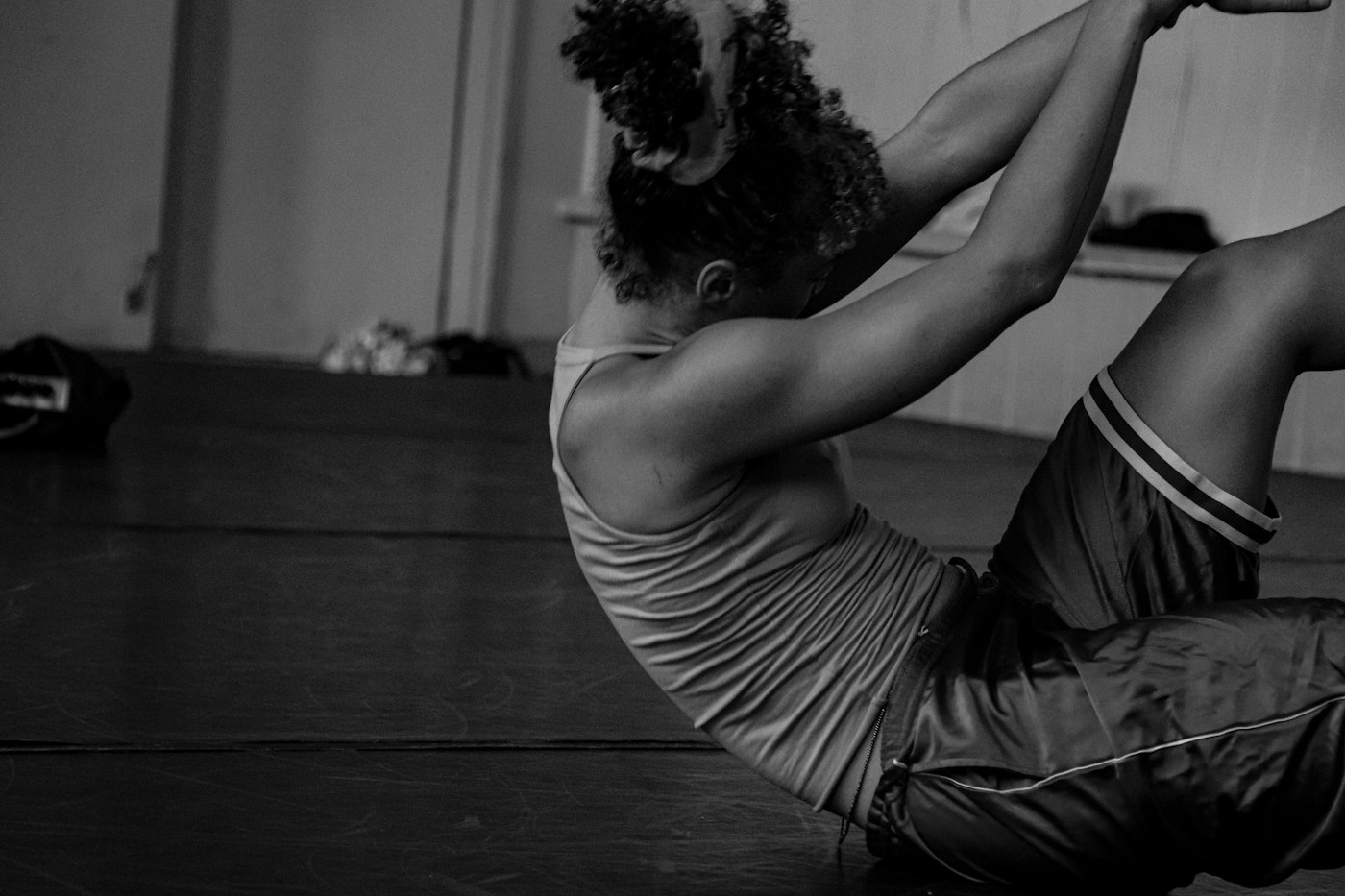
This is a 30-day core challenge that takes about ten minutes a day and needs no equipment. Each day’s workout combines three to five exercises — crunches, dead bugs, reverse crunches, bicycle crunches and plank holds — with the numbers building gradually. Every fifth day is a rest day.
It’s written for beginners, and it rotates exercises on purpose. Your core isn’t one muscle, and a challenge built entirely on crunches trains a fraction of it while leaving the deeper muscles that actually stabilise your spine untouched.
Before you start
This is general information, not medical advice. Check with a doctor before starting, especially if you’re pregnant or postpartum, injured, have a medical condition, or take medication. Stop if you feel sharp pain. Core work in particular needs clearing during pregnancy and after birth — see who should modify or skip this.
Challenge at a glance
| Duration | 30 days |
|---|---|
| Daily time | About 10 minutes |
| Equipment | None (a mat or rug helps) |
| Exercises | Five, introduced gradually |
| Difficulty | Beginner, with modifications both ways |
| Rest days | Days 5, 10, 15, 20 and 25 |
| Goal | A stronger, more stable core |
How the challenge works
- Do the day’s full workout as a circuit — one set of each exercise, then repeat if the numbers are high. Rest 30 to 60 seconds between exercises.
- New exercises arrive in stages, not all at once. Days 1–4 use three moves. Reverse crunches join on day 6, bicycle crunches on day 11, side planks on day 16. By week three you’re doing the full rotation.
- Form beats speed, and it isn’t close. Ten slow crunches where your abs do the work beat thirty where your neck and momentum do it. If a rep gets sloppy, that set is finished.
- Rest days are real rest. Abdominal muscles recover like any others, and this plan asks for work every single other day.
- Scale down rather than skip. Half the reps still counts. A missed day doesn’t.
The 30-day abs plan
Bicycle crunch counts are total reps, not per side. Side planks are per side.
| Day | Workout |
|---|---|
| 1 | 10 crunches · 10 dead bugs · 15-sec plank |
| 2 | 12 crunches · 12 dead bugs · 20-sec plank |
| 3 | 14 crunches · 14 dead bugs · 25-sec plank |
| 4 | 16 crunches · 16 dead bugs · 30-sec plank |
| 5 | Rest |
| 6 | 16 crunches · 16 dead bugs · 10 reverse crunches · 30-sec plank |
| 7 | 18 crunches · 18 dead bugs · 12 reverse crunches · 35-sec plank |
| 8 | 20 crunches · 20 dead bugs · 14 reverse crunches · 40-sec plank |
| 9 | 22 crunches · 20 dead bugs · 16 reverse crunches · 45-sec plank |
| 10 | Rest |
| 11 | 20 crunches · 20 bicycle crunches · 14 reverse crunches · 45-sec plank |
| 12 | 22 crunches · 24 bicycle crunches · 16 reverse crunches · 50-sec plank |
| 13 | 24 crunches · 28 bicycle crunches · 18 reverse crunches · 55-sec plank |
| 14 | 26 crunches · 32 bicycle crunches · 20 reverse crunches · 60-sec plank |
| 15 | Rest |
| 16 | 24 crunches · 30 bicycle crunches · 18 reverse crunches · 45-sec plank · 20-sec side plank |
| 17 | 26 crunches · 34 bicycle crunches · 20 reverse crunches · 50-sec plank · 25-sec side plank |
| 18 | 28 crunches · 38 bicycle crunches · 22 reverse crunches · 55-sec plank · 30-sec side plank |
| 19 | 30 crunches · 42 bicycle crunches · 24 reverse crunches · 60-sec plank · 35-sec side plank |
| 20 | Rest |
| 21 | 32 crunches · 44 bicycle crunches · 26 reverse crunches · 65-sec plank · 35-sec side plank |
| 22 | 34 crunches · 48 bicycle crunches · 28 reverse crunches · 70-sec plank · 40-sec side plank |
| 23 | 36 crunches · 52 bicycle crunches · 30 reverse crunches · 75-sec plank · 40-sec side plank |
| 24 | 38 crunches · 56 bicycle crunches · 32 reverse crunches · 80-sec plank · 45-sec side plank |
| 25 | Rest |
| 26 | 40 crunches · 60 bicycle crunches · 34 reverse crunches · 85-sec plank · 45-sec side plank |
| 27 | 42 crunches · 64 bicycle crunches · 36 reverse crunches · 90-sec plank · 50-sec side plank |
| 28 | 44 crunches · 68 bicycle crunches · 38 reverse crunches · 95-sec plank · 50-sec side plank |
| 29 | Light: 20 crunches · 30 bicycle crunches · 15 reverse crunches · 45-sec plank · 25-sec side plank |
| 30 | Final workout: 45 crunches · 70 bicycle crunches · 40 reverse crunches · 100-sec plank · 55-sec side plank |
Day 29 is deliberately light so day 30 lands on a core that isn’t already tired, and day 30 is only a few reps past day 28 rather than a leap. If any day’s number is beyond you, do what you can in good form and write down what you managed — that record is more useful than the plan.
How to do the exercises properly
Five moves, and each one has a single mistake that ruins it.
Crunch
Lie on your back, knees bent, feet flat. Hands lightly behind your head or crossed on your chest. Curl your shoulders up off the floor by shortening the distance between your ribs and hips — your lower back stays down. It’s a small movement, maybe 30 degrees, not a sit-up.
The mistake: pulling on your neck with your hands. If your chin is being dragged toward your chest, cross your arms on your chest instead and the problem disappears.
Dead bug
Lie on your back, arms straight up toward the ceiling, knees bent at 90 degrees above your hips. Slowly lower one arm overhead and the opposite leg toward the floor, then return and swap. One rep is one side.
The mistake: letting your lower back arch off the floor as the limbs go down. Press your ribs toward your hips, go only as far as you can hold that, and come back. That restraint is the exercise — it’s in this plan because it trains the deep stabilising muscles with almost no load on the spine.
Reverse crunch
On your back, knees bent and lifted so your shins are roughly parallel with the floor. Curl your knees toward your chest so your hips lift slightly off the floor, then lower slowly under control.
The mistake: swinging your legs and using momentum. Slow enough that you could stop halfway. This is the plan’s version of a leg raise, chosen because bent knees take far less strain off the lower back than straight-leg raises do.
Bicycle crunch
On your back, hands lightly behind your head, legs up with knees bent. Bring one knee in while rotating your opposite shoulder toward it, extending the other leg. Alternate. Each knee-to-shoulder is one rep.
The mistake: going fast and pulling with the elbows. The rotation should come from your trunk, not your arms. Half speed, twice the effect.
Plank hold
Forearms down, elbows under shoulders, one straight line from head to heels. Squeeze your glutes, keep your ribs down, breathe steadily. End the hold when your hips sag — that’s the point where it stops training your core and starts loading your back.
Side plank is the same idea on one forearm, hips stacked and lifted. If it’s too much, drop the lower knee to the floor.
For the full plank form guide and a plan built entirely around hold times, see the 30-day plank challenge.
Beginner and advanced modifications
If you need it easier
- Halve the numbers and follow the same shape. Day 1 at five crunches is a legitimate day 1.
- Swap reverse crunches for dead bugs for the first two weeks if you feel anything at all in your lower back.
- Knee side planks and knee planks instead of the full versions.
- Split the workout — two exercises in the morning, the rest later.
- Feet under a sofa for crunches if your feet keep lifting.
If you need it harder
- Slow everything down — three seconds up, three seconds down. The single most effective upgrade, and it adds no reps.
- Pause at the hardest point for two seconds on every rep.
- Straight-leg versions of dead bugs and reverse crunches, once your lower back stays flat throughout.
- Hold a weight — a book or water bottle at your chest for crunches.
- Two circuits of the day’s numbers instead of one.
Abs challenge for men and for women
The training is the same. There’s no male core and no female core, no exercise that works for one and not the other, and no reason to run two different plans. Anyone searching for a gendered version of this challenge should do this one.
What does differ is the questions people arrive with, and two are worth answering directly.
Where body fat sits varies between people, and typical patterns do differ on average — but that’s a fat-distribution question, not a training one, and you can’t change it by choosing different ab exercises. Nobody can train fat off a specific area, which is covered properly below.
Postpartum core work is the one place where the advice genuinely needs to be different, and it isn’t a modification of this plan — it’s a different starting point. Abdominal separation and pelvic floor recovery need assessing before crunches and planks make sense at all. That’s a conversation with a pelvic health physiotherapist, not a chart.
Beyond those, the honest answer is: same plan, same form, same thirty days.
Who should modify or skip this challenge
Speak to a doctor or physiotherapist before day 1 if any of these apply:
- Lower back pain, current or recurring — some of these moves are often fine and some aren’t, and which is which is individual
- Pregnancy — crunches and front planks are commonly modified or dropped as pregnancy progresses. Ask your midwife or doctor rather than adapting the chart yourself
- Postpartum, especially with abdominal separation (diastasis recti) or after a caesarean — see a pelvic health physiotherapist first
- A hernia, or recent abdominal or spinal surgery
- Neck or shoulder problems, since crunches and planks both involve them
- Any medical condition or medication that affects your blood pressure or balance
Abdominal soreness for a day or two after starting is normal. Lower back pain, neck pain, or anything sharp is not — stop and get it assessed rather than working around it.
What to do if you miss a day
Carry on from where you stopped. Don’t double up — two workouts in one day to catch up leaves you too sore to do the next one. Miss several days and repeat your last completed workout before moving on. Thirty sessions is the goal, not thirty consecutive dates.
What to expect from 30 days
You’ll finish with a noticeably stronger and more stable core. The specific things people report are real: planks that felt impossible in week one become routine, the lower back aches less after a long day at a desk, other exercises feel steadier, and getting up off the floor stops involving a roll and a push.
Whether your abs become visible is a different question with a different answer, and it’s the one most abs challenges dodge. Visible abs are mostly a matter of how much fat sits over the muscle, which is driven by overall nutrition and total activity across months — not by ab exercises. And you cannot remove fat from one area by training that area. Doing crunches does not burn the fat above the crunching muscles; the body doesn’t work that way, however intuitive it feels.
So: 30 days of this will make your core stronger, and it may make your midsection feel firmer as the muscle underneath develops. It will not reveal a six-pack on its own, and any page promising that in a month is selling something. The strength is the result. It’s a good one, and it’s the part that makes everything else you do easier.
Printable tracker
Tick each day as you finish it. If you had to reduce a day’s numbers, write what you actually did in the margin — that’s the record worth keeping.
Common questions
Can you train abs every day?
Abdominal muscles recover like any other muscle, so they do need rest — which is why this plan takes five rest days rather than running straight through. Daily low-intensity core work is fine for most healthy people, but if you’re sore enough that your form slips in the first few reps, take an extra day off.
How long until I see results?
Strength changes come fast — most people feel a difference inside two weeks, and that’s your nervous system getting better at recruiting the muscles. Visible change is slower and depends far more on body fat than on the workouts, so it’s measured in months, not days, and it isn’t something a 30-day plan can promise.
Is it normal for my lower back to hurt?
No. Back pain during core work almost always means a technique problem: your lower back is arching off the floor during dead bugs or reverse crunches, or your hips have dropped in the plank. Reduce the range, slow down, and keep your ribs drawn toward your hips. If it still hurts, stop the challenge and get it assessed — lower back pain is a signal, not something to push through.
Should I do cardio as well?
If your goal is strength, this is enough on its own. If your goal involves changing body composition, then overall activity and what you eat are doing the heavy lifting, and this challenge is a small supporting part of that rather than the mechanism.
Can I do this challenge with the plank one at the same time?
You could, but there’s not much point — this plan already includes plank holds. Run them back to back instead, or pair this with a lower-body challenge for better balance.
What to try next
If you want to go deeper on one exercise rather than a rotation, the 30-day plank challenge builds a single hold from 20 seconds to two and a half minutes. For balance across your whole body, pair this with the 30-day squat challenge and the 30-day push-up challenge — core, legs and upper body in about twenty minutes a day.

Tayiba Shabir
Tayiba writes LifestyleRoot’s home, living and habit guides — practical plans you can actually follow, without the hype.
30-Day Abs Challenge Chart
Key: C crunches · DB dead bugs · RC reverse crunches · BC bicycle crunches (total, not per side) · P plank · SP side plank per side. Do it as a circuit with 30–60 seconds between exercises. End a set when your form breaks.
Days 1–8
- 110 C · 10 DB · 15s P
- 212 C · 12 DB · 20s P
- 314 C · 14 DB · 25s P
- 416 C · 16 DB · 30s P
- 5Rest
- 616 C · 16 DB · 10 RC · 30s P
- 718 C · 18 DB · 12 RC · 35s P
- 820 C · 20 DB · 14 RC · 40s P
Days 9–16
- 922 C · 20 DB · 16 RC · 45s P
- 10Rest
- 1120 C · 20 BC · 14 RC · 45s P
- 1222 C · 24 BC · 16 RC · 50s P
- 1324 C · 28 BC · 18 RC · 55s P
- 1426 C · 32 BC · 20 RC · 60s P
- 15Rest
- 1624 C · 30 BC · 18 RC · 45s P · 20s SP
Days 17–24
- 1726 C · 34 BC · 20 RC · 50s P · 25s SP
- 1828 C · 38 BC · 22 RC · 55s P · 30s SP
- 1930 C · 42 BC · 24 RC · 60s P · 35s SP
- 20Rest
- 2132 C · 44 BC · 26 RC · 65s P · 35s SP
- 2234 C · 48 BC · 28 RC · 70s P · 40s SP
- 2336 C · 52 BC · 30 RC · 75s P · 40s SP
- 2438 C · 56 BC · 32 RC · 80s P · 45s SP
Days 25–30
- 25Rest
- 2640 C · 60 BC · 34 RC · 85s P · 45s SP
- 2742 C · 64 BC · 36 RC · 90s P · 50s SP
- 2844 C · 68 BC · 38 RC · 95s P · 50s SP
- 29Light: 20 C · 30 BC · 15 RC · 45s P · 25s SP
- 3045 C · 70 BC · 40 RC · 100s P · 55s SP
Reduced a day? Write what you actually did next to it. Stop if you feel sharp pain, and stop any set the moment your lower back arches off the floor. General information only, not medical advice. · lifestyleroot.com/habits-challenge/30-day-abs-challenge/